
Facilities
Who pays: splitting repair responsibility in a multi-tenant building
Most landlord and tenant repair disputes are not really disagreements about the lease. They are disagreements about what actually failed.
In a single-tenant building a repair is a repair. In a multi-tenant building it is also an allocation question, and that second question causes more delay than the work itself. A cooling failure on a Friday afternoon becomes an argument about whether the equipment is base building or tenant, and the room stays warm while the argument runs.
The lease decides who pays. How quickly everyone agrees depends on the quality of the information about what broke.
The general shape of the split
Leases vary enormously and yours governs, so treat the following as the common pattern rather than a rule.
Landlord, typically. Structure, roof, exterior, common areas, and the base building systems serving the property as a whole. Central plant, risers, main distribution, common area lighting and the parking lot usually sit here.
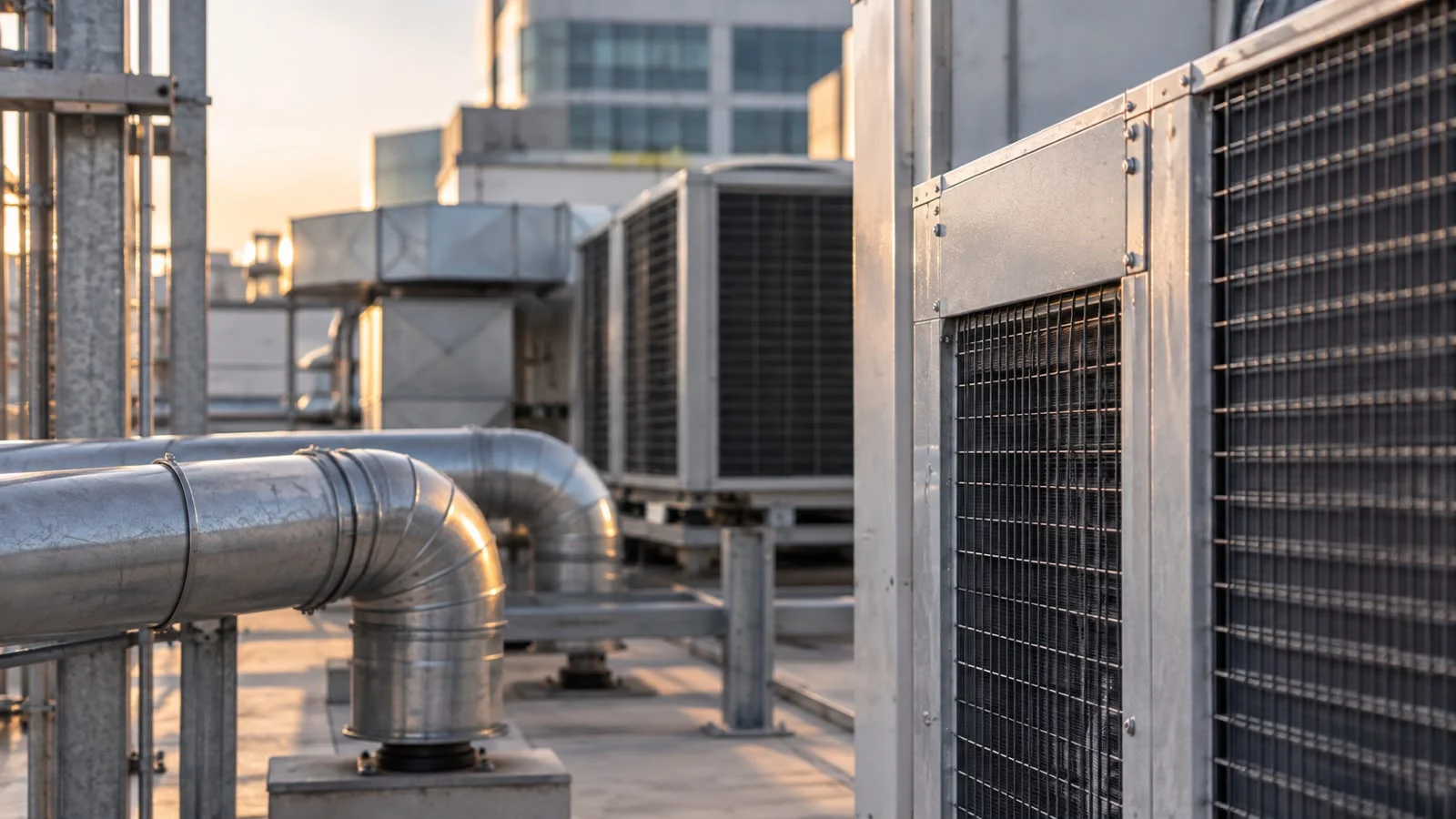
Tenant, typically. Everything inside the demised premises, tenant improvements installed for that occupier, and equipment installed for their exclusive use. A split system cooling a tenant's server room is the classic example, and it surprises people regularly.
Shared, via common area charges. Common area maintenance recovered across tenants by a formula in the lease. This is where most of the arguing happens, because the split depends on what category the cost was put in.
Where the arguments actually start
Four situations produce most of the disputes we see, and none of them is really about the lease wording.
Equipment that serves one tenant but lives in a common area. The unit is on the roof or in a mechanical room, so it looks like base building. It cools one suite, so it behaves like tenant equipment. Whoever installed it usually knew which it was, and that knowledge left with them.
Damage crossing a boundary. A condensate overflow on floor thirty damages the ceiling and carpet on floor twenty-nine. Three parties are now involved and the cause is in none of their spaces. There is more on why that specific failure is so common in our note on HVAC in Brickell towers.
Repair versus replacement. Many leases make a tenant responsible for repair and a landlord responsible for capital replacement. Where a unit at the end of its life fails, both readings are arguable, and the honest answer depends on the equipment's actual condition rather than on who is arguing.
Deferred maintenance. A failure that follows years of neglect raises the question of who was supposed to be maintaining it. Without records, nobody can answer, and that vacuum is where disputes grow.
What settles it quickly
In practice, four things resolve almost every allocation question before it becomes a dispute.
- Naming the equipment precisely. Not "the AC" but the unit, its location, its make, model and serial. That is usually enough to establish what it serves and therefore whose it is.
- Naming the cause. A failed capacitor, a blocked condensate line, physical damage, a component at the end of its service life. The cause frequently decides the category on its own.
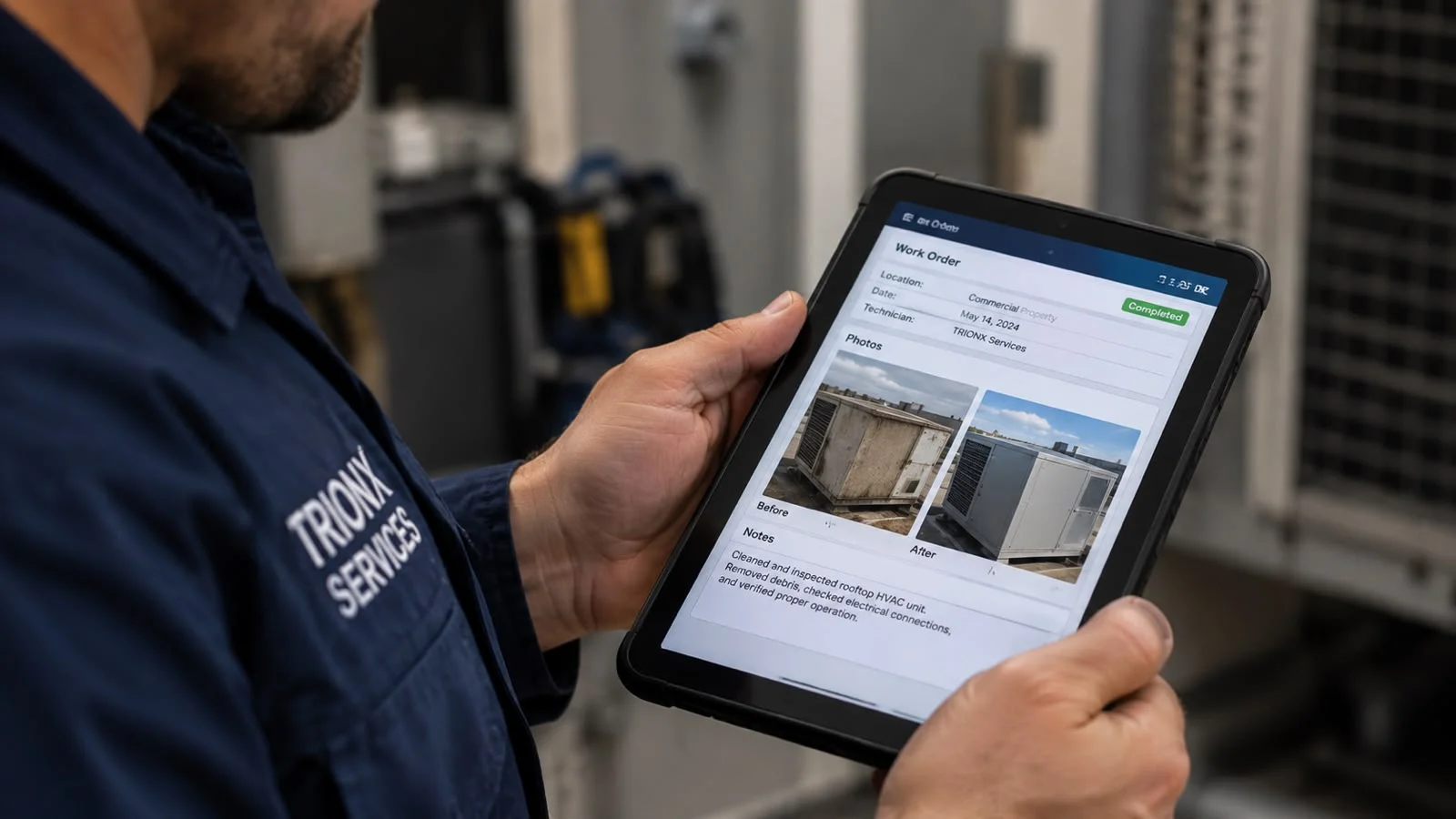
- Photographs. A photograph of the failed part and of the damage removes the need for anyone to take a description on trust.
- The maintenance history. Whether the equipment was being serviced, and by whom, answers the deferred maintenance question directly.
That is exactly why our reports name the equipment and the fault rather than the trade and the hours. It is not paperwork for its own sake. It is the document that lets a property manager allocate a cost right away rather than two weeks later. The same standard applies to the invoice, which is covered in our note on how to read a maintenance invoice.
Fix first, allocate second
The single most useful policy in a multi-tenant building is to authorize the work and settle the allocation afterward. A cooling failure that sits unattended for two days while responsibility is debated has cost everybody more than the repair, and in a food or medical tenancy it can cost a great deal more.
That works when the documentation is good enough to allocate retrospectively without argument, which is the whole point of insisting on it. Where it is not, everyone learns to argue first, and the building gets slower every year.
Getting ahead of it
Two things are worth doing while nothing is broken. Build an equipment register recording what serves what, because the moment to establish whether a rooftop unit serves suite 400 or the common areas is not during a failure. And agree the escalation route in advance: who authorizes work, up to what value, and who is told.
Properties that have done both settle allocation questions in an afternoon. Properties that have not tend to have the same argument every year, about a different unit.
Common questions
Questions we get asked about this
Who pays for repairs in a multi-tenant commercial building?
The lease decides it, usually by splitting responsibility between building systems and anything within the demised premises. Disputes are rarely about the wording. They are about not knowing what failed, where, and what caused it.
What is the difference between common area and demised premises repairs?
Common area work covers the structure and shared systems and is normally the landlord responsibility, often recovered through common area charges. Work inside the tenant space is usually the tenant, with the boundary set at a defined point in each system.
How do I settle a repair responsibility dispute quickly?
With information rather than argument. A report identifying the component that failed, its location relative to the lease boundary, the cause and photographs settles most of these in one exchange, because it removes the guesswork both sides were arguing from.
Keep reading
Related field notes
What a proper work-order closeout should contain
Tenant maintenance requests: urgent, or can it wait?
Adjusting a door closer: the valves and what each one does
Thresholds, sweeps and weatherstripping: the parts that wear first
Hurricane shutters: testing them before you need them
Repair or replace a commercial door
One company, whoever does the work
Our technicians handle the trades that need no state license, and licensed contractors handle the ones that do. Either way we scope it, book the visit and file the record. Tell us the property and the problem and we will come back with a window. Call out of hours and someone who works here answers.