
Facilities
How to read a commercial maintenance invoice
Most disputes over maintenance invoices are not about dishonesty. They are about an invoice that never explained what the money bought.
Approving contractor invoices is one of the least discussed parts of managing commercial property, and one of the easiest places to lose money quietly. The problem is rarely fraud. It is invoices written for the contractor's accounting system rather than for the person paying, so a charge that is entirely legitimate looks arbitrary and a charge that is not looks the same.
Knowing what the standard lines mean makes both easier to spot.
The call-out or trip charge
Most commercial contractors charge something for attending, separately from the labor once on site. It covers travel, vehicle and the fact that a booked visit occupies a slot whether or not the job turns out to be five minutes' work.
It is a normal line. Check whether it was disclosed before dispatch, whether it is charged once per visit rather than per trade or per work order, and whether a second visit to finish the same job attracts a second one. Reasonable contractors waive the second call-out when the return is to fit a part they had to order. Ask about that specifically, because it is rarely written down.
Labor, and how the clock is counted
Labor is normally billed hourly against a minimum, commonly one or two hours. Three things determine whether the number is fair.
The rate, and which rate applied. Standard, after-hours and emergency rates differ substantially. An invoice should say which one was used and the time should support it. Work starting at four in the afternoon and running to seven may legitimately cross two rates.
The number of technicians. Two technicians for two hours is four labor hours. That is often correct, since a great deal of commercial work genuinely needs two people for access or safety, but it should be stated rather than buried in a total.
Whether travel is inside the hours. If travel is covered by the call-out charge it should not also appear as labor.
Parts and materials
Contractors mark up parts. That is standard across the industry and covers sourcing, stocking, warranty handling and the cash tied up in van stock. The line should identify what was actually fitted.
"Parts" as a single line with a number beside it tells you nothing and cannot be checked against anything later. A part number, a description and a quantity can be. On larger items it is entirely reasonable to ask for the supplier invoice, and a contractor who will not show it on a significant part is telling you something.
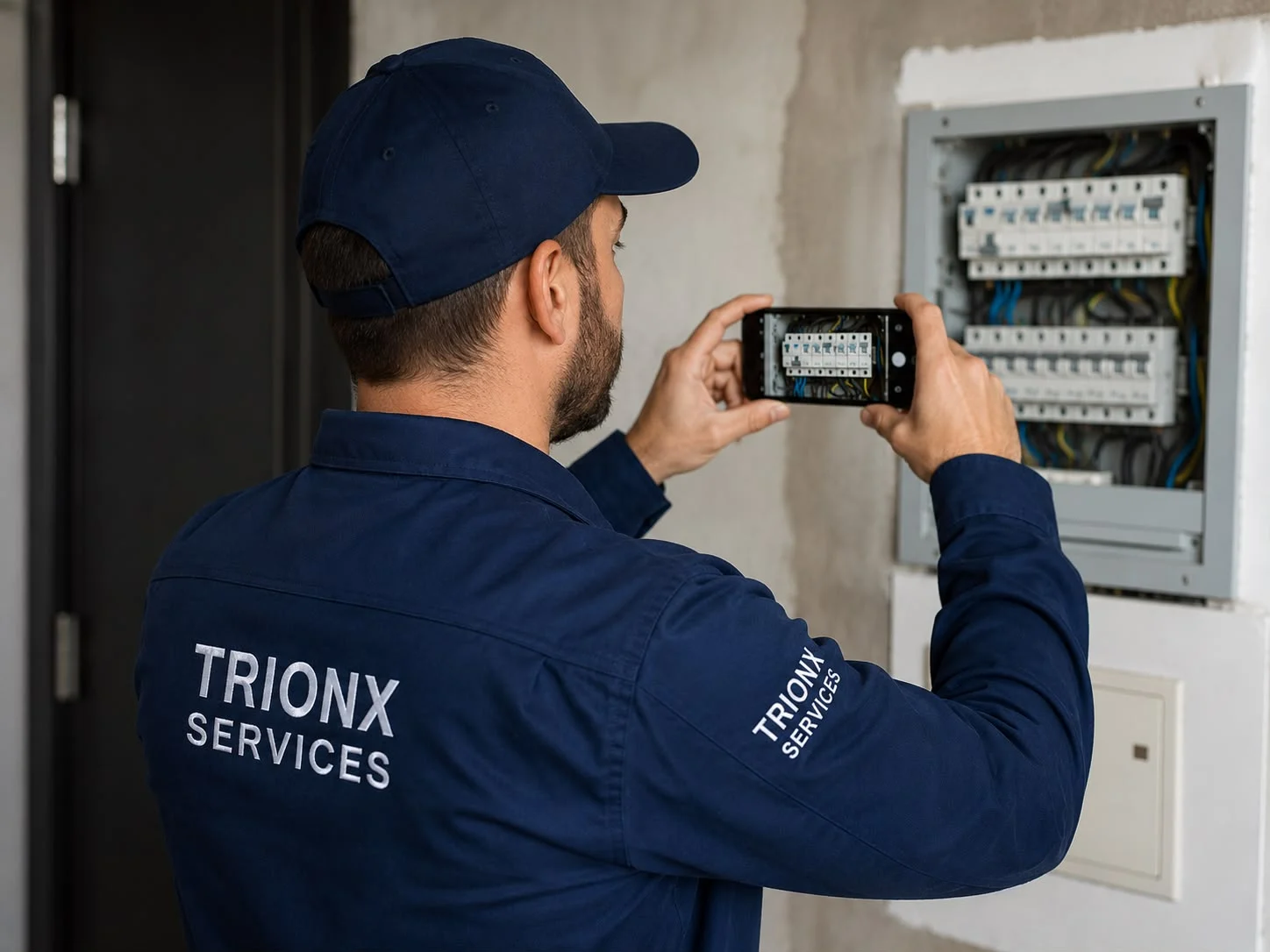
Watch for consumables billed twice, once in a materials line and again inside a labor rate that is supposed to include them, and for a part appearing on an invoice when the work order says the technician diagnosed but did not repair.
The description line, which is the one that matters
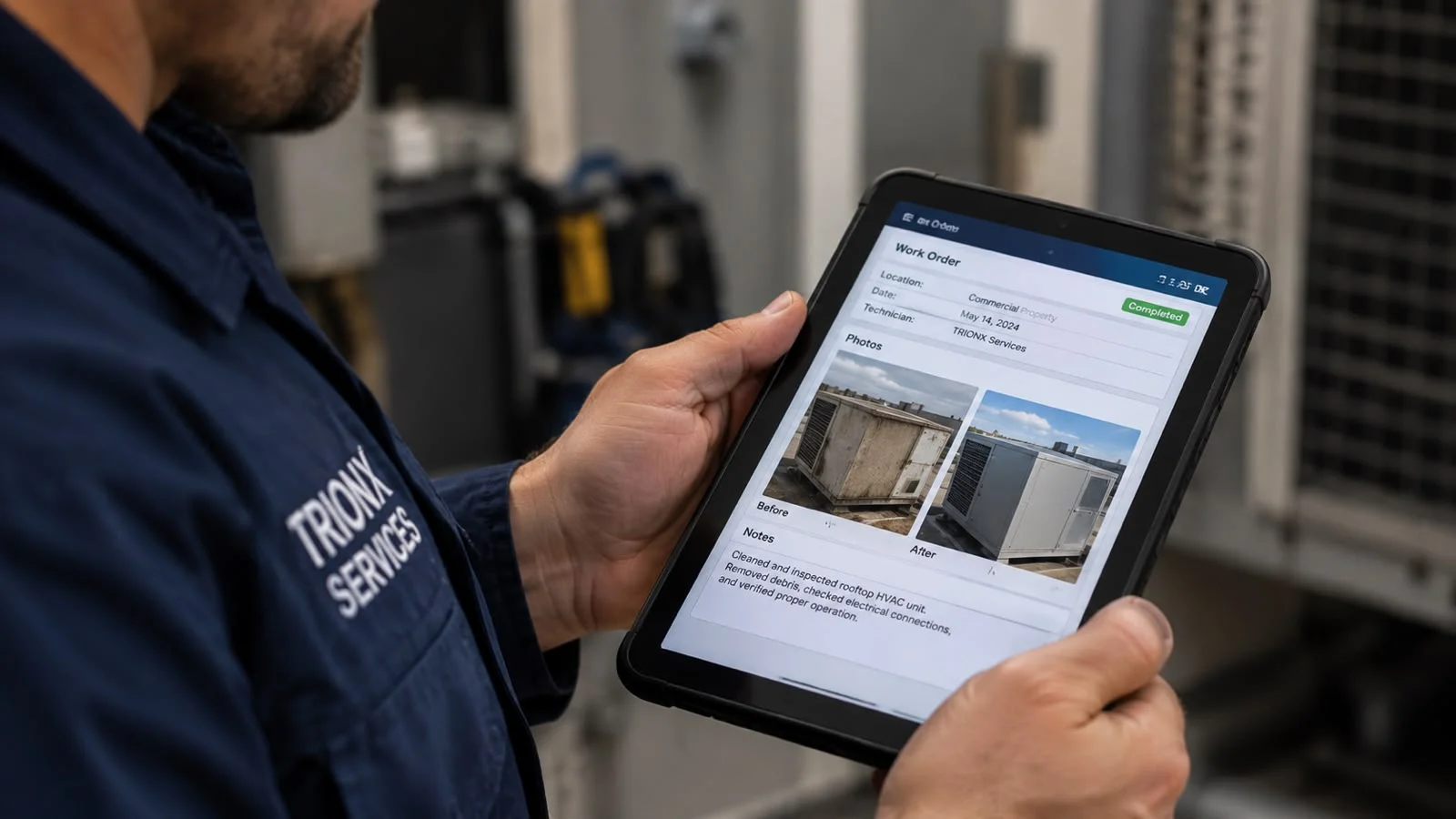
Everything above is arithmetic. The description is where an invoice either earns approval or does not. It should name the equipment, state what was wrong, state what was done and state whether the problem is resolved or still open.
"Service call, AC unit" is not a description. "Rooftop unit 3, no cooling. Found failed run capacitor on compressor circuit, replaced, system running and holding setpoint. Condenser coil heavily fouled, cleaning quoted separately" is. The second version can be filed against the asset, used to spot a repeat failure, handed to an insurer and compared against next year's invoice. The first cannot.
This is the same argument as the one for a proper closeout report, and it is why we write invoices that name the equipment and the fault rather than the trade and the hours.
Questions worth asking before approving
- Does the equipment named match the work order that was raised?
- Does the time on the invoice match when anyone was actually on site?
- Was the rate applied the one that was quoted when the job was booked?
- If a part was fitted, is it identified well enough to look up?
- Does the description say whether the fault is fixed or still open?
- Is anything here the second visit for a problem already billed once?
That last question is worth asking properly. Repeat visits for the same fault on the same equipment are the clearest signal in the whole file that something is being cleared rather than fixed, whether that is a drain being rodded instead of a grease line being jetted or a breaker being reset instead of a load being measured.
In multi-tenant property, the invoice is also an allocation document
Where a cost is being passed through to a tenant or split under common area charges, the invoice becomes the evidence for that split, and it needs to survive being read by somebody who was not there. Location, equipment and cause all have to be specific enough for the allocation to hold up. There is more on that in our note on splitting repair responsibility in a multi-tenant building.
Common questions
Questions we get asked about this
What should a commercial maintenance invoice show?
The property and work order reference, the date and hours on site, the labor rate and whether it is standard or after hours, parts identified by what they are, and a description matching the closeout report. Anything less cannot be checked.
What is a trip charge or call-out fee?
A fixed charge for attending, separate from labor, covering travel and vehicle time. It is legitimate and normal. Check whether it was disclosed before dispatch rather than appearing for the first time on the invoice.
How do I check whether I was overcharged?
Compare the hours billed against the arrival and departure times in the closeout report, check parts against what the photographs show was replaced, and confirm the rate applied matches the rate agreed for that time of day.
Keep reading
Related field notes
Who pays: splitting repair responsibility in a multi-tenant building
A ceiling tile is stained or sagging: what it is telling you
Maintenance a Miami restaurant needs, month by month

Condo common elements: association or unit owner
Vendor onboarding: the COI, W-9 and license packet, item by item
How after-hours and emergency rates are structured
One company, whoever does the work
Our technicians handle the trades that need no state license, and licensed contractors handle the ones that do. Either way we scope it, book the visit and file the record. Tell us the property and the problem and we will come back with a window. Call out of hours and someone who works here answers.