
Facilities
Choosing a facility maintenance vendor: questions worth asking
The vendor comparison that matters is not the hourly rate. It is what happens on the third call, when the first two did not fix it.
Most facility maintenance vendors look similar on paper. Same trades listed, same promises about response times, rates within a few dollars of each other. The differences only become visible after a few months, by which point changing again is its own project.
The questions below are the ones that surface those differences early. None of them is a trick, and a good vendor will answer all of them without hesitating.
Who is actually going to do the work?
Ask directly whether the work is performed by employees or by licensed contractors. Both models are normal and both can be run well or badly. You need a straight answer, and evidence that the arrangement is managed properly.
TrionX does both, and says which is which up front rather than when a certificate is requested. Six trades are performed by our own employees, and the four that Florida licenses are carried out by contractors who hold that license. The questions worth asking any vendor are the same ones we would expect: who holds the license and the insurance for whoever is actually on site, whether the same person comes back to the same property, and who you talk to when something goes wrong. A vendor who cannot answer the last one is passing work through rather than managing it.
What does a response window actually mean here?
Everybody advertises rapid response. Ask what the window is for your property, for your trade, at eleven at night, and ask what happens when it is missed.
The answer worth having is specific and occasionally disappointing. A vendor who tells you three hours when three hours is the truth is more useful than one who says one hour and arrives in four. Ask how you will be told if the window slips.
Can one call cover the whole problem?
A ceiling coming down after a leak is a plumbing job, a drywall job and a paint job. Plenty of vendors will fix the leak and leave the rest, which means you are now coordinating two more trades and holding the gap between them yourself.
Ask what happens after the primary fault is fixed, and who does the make-good. Working out which trade a problem belongs to should be the vendor's job rather than yours, which is the entire argument for a single number covering all the trades.
What will I have afterward?
Ask to see a completed work order and invoice from another property, with the client details removed. It takes thirty seconds and tells you more than any conversation about process.
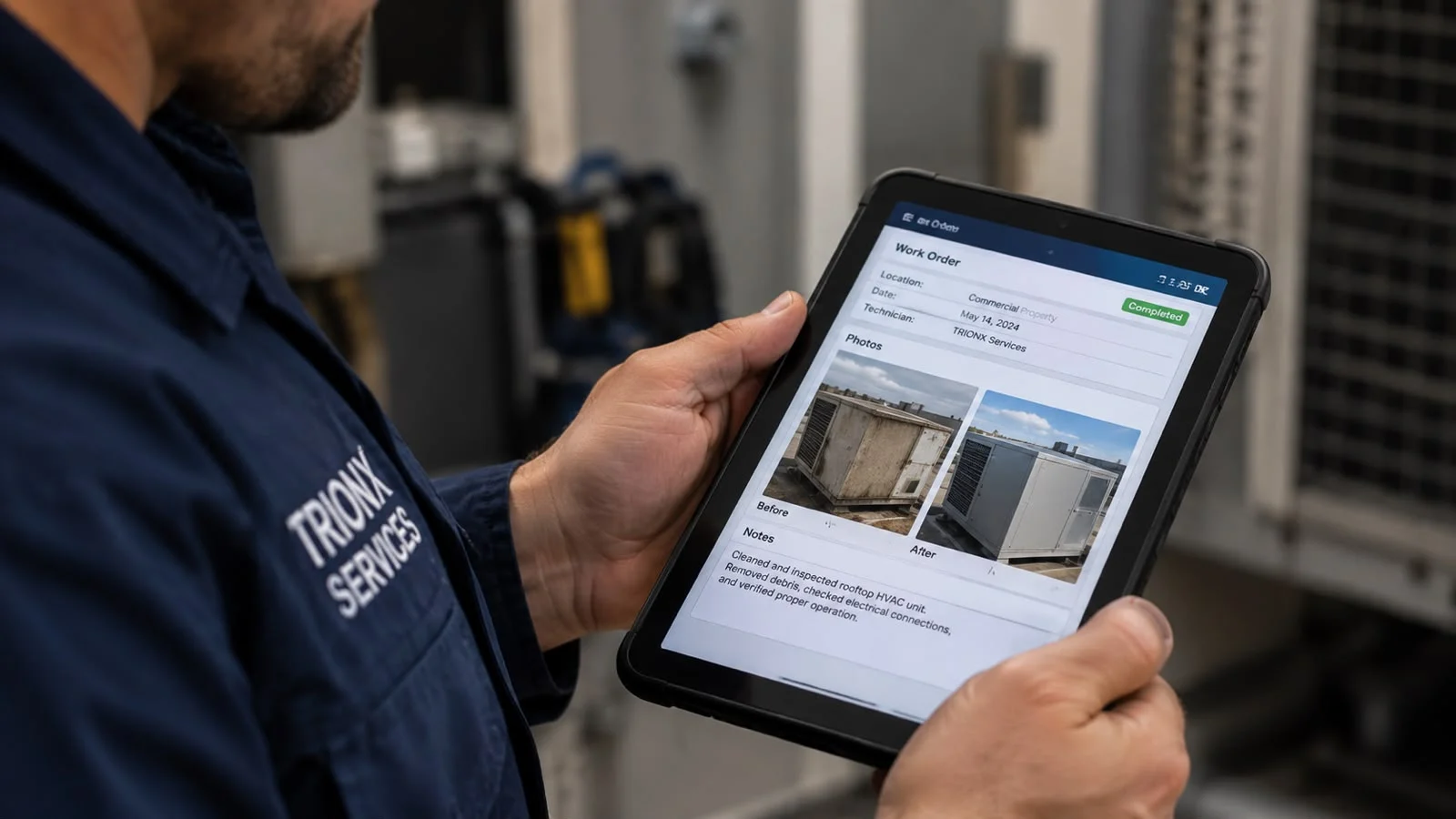
A good report names the equipment, describes the fault, states the work carried out, attaches photographs and flags any outstanding item with a recommendation. A poor one gives you a trade, a number of hours and a total. The second kind cannot be filed against an asset, cannot support a warranty or insurance claim, and cannot tell you next year whether this is the third time the same unit has failed. Our note on what a closeout report should contain covers the detail.
How do you handle building access requirements?
In Miami this question separates vendors quickly. Towers, gated industrial parks and managed centers all have their own access rules, and a technician arriving without a certificate of insurance on file simply does not get in.
Ask whether the vendor handles that coordination or expects you to. A vendor who lodges the COI and books the freight elevator as part of the job is saving you a recurring administrative task and, more importantly, saving the wasted mobilizations that otherwise happen every few months.
What does an out-of-hours call cost, exactly?
Ask for the standard rate, the after-hours rate, the emergency rate, the call-out charge and the minimum billable time, and ask when each one applies. Then ask whether a return visit to fit an ordered part attracts a second call-out.
None of this is unreasonable to ask before you need it, and asking at two in the morning is considerably less comfortable. A vendor who is straightforward about rates when nothing is broken tends to be straightforward about them when something is.
What to watch for in the first three months
The questions get you a shortlist. The first quarter tells you whether the answers were true. Three things are worth watching: whether the same fault comes back, whether the paperwork arrives without being chased, and whether you are told about problems before they become emergencies.
A vendor who tells you a unit is close to end of life, and says so months before it fails, is worth more than one whose invoices are slightly cheaper. That conversation is where the money in facility maintenance actually is.
Common questions
Questions we get asked about this
What should I ask a commercial maintenance vendor?
Whether the work is performed by employees or licensed contractors, what insurance applies to each, how emergencies are dispatched out of hours, what a closeout report contains, and how change orders are approved once a technician is on site.
Is it better to use one vendor or separate trades?
A single vendor reduces the number of relationships and puts one company on the hook for the result. Separate trades can price sharper on large single-trade jobs. The honest answer depends on the size of your portfolio and how much of your week scheduling takes.
Should a maintenance vendor use employees or subcontractors?
Both models are normal and both can be run well or badly. You should be told which applies, the insurance should match, and licensed trades should are carried out by contractors who hold the license Florida requires.
Keep reading
Related field notes
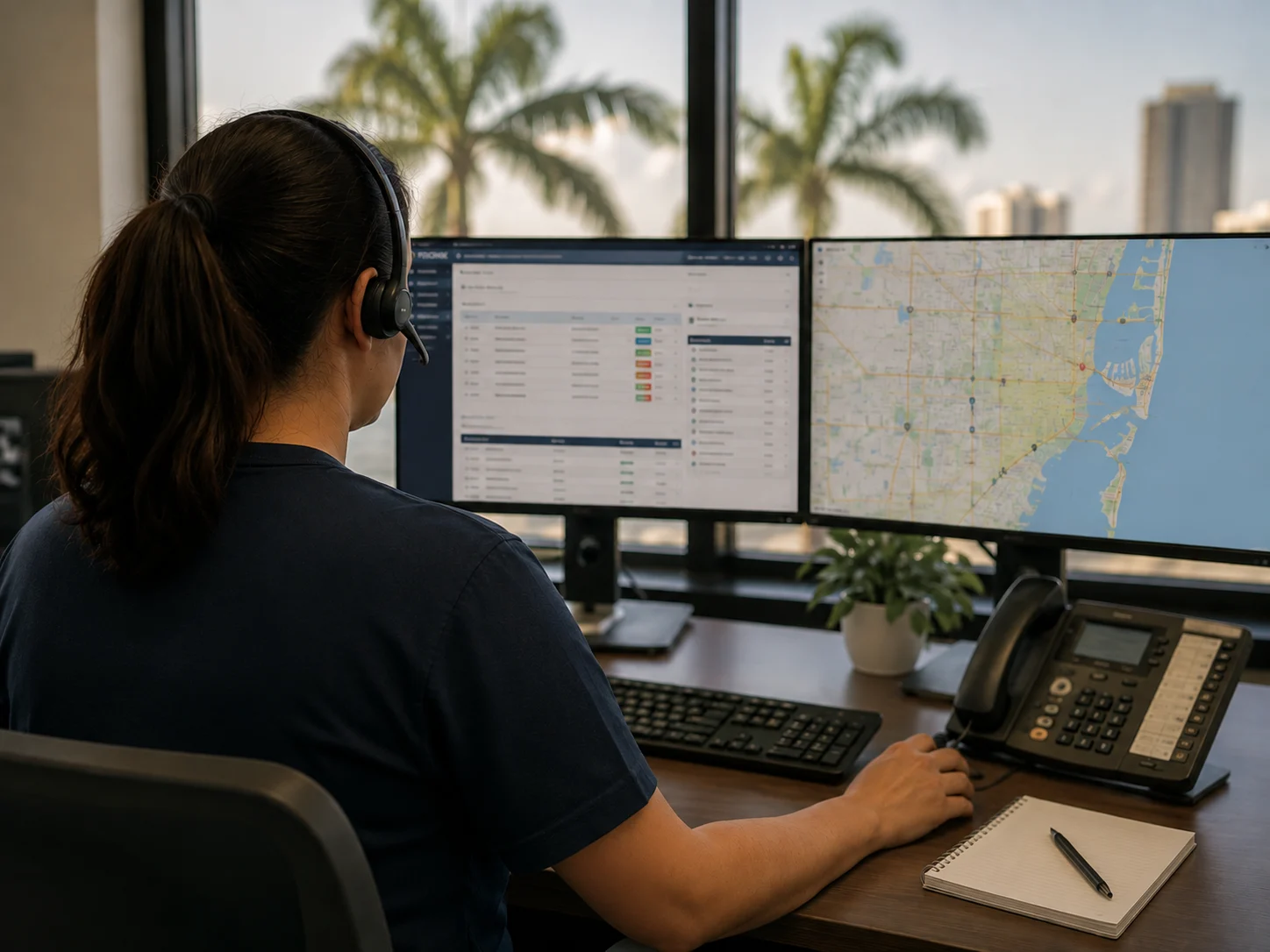
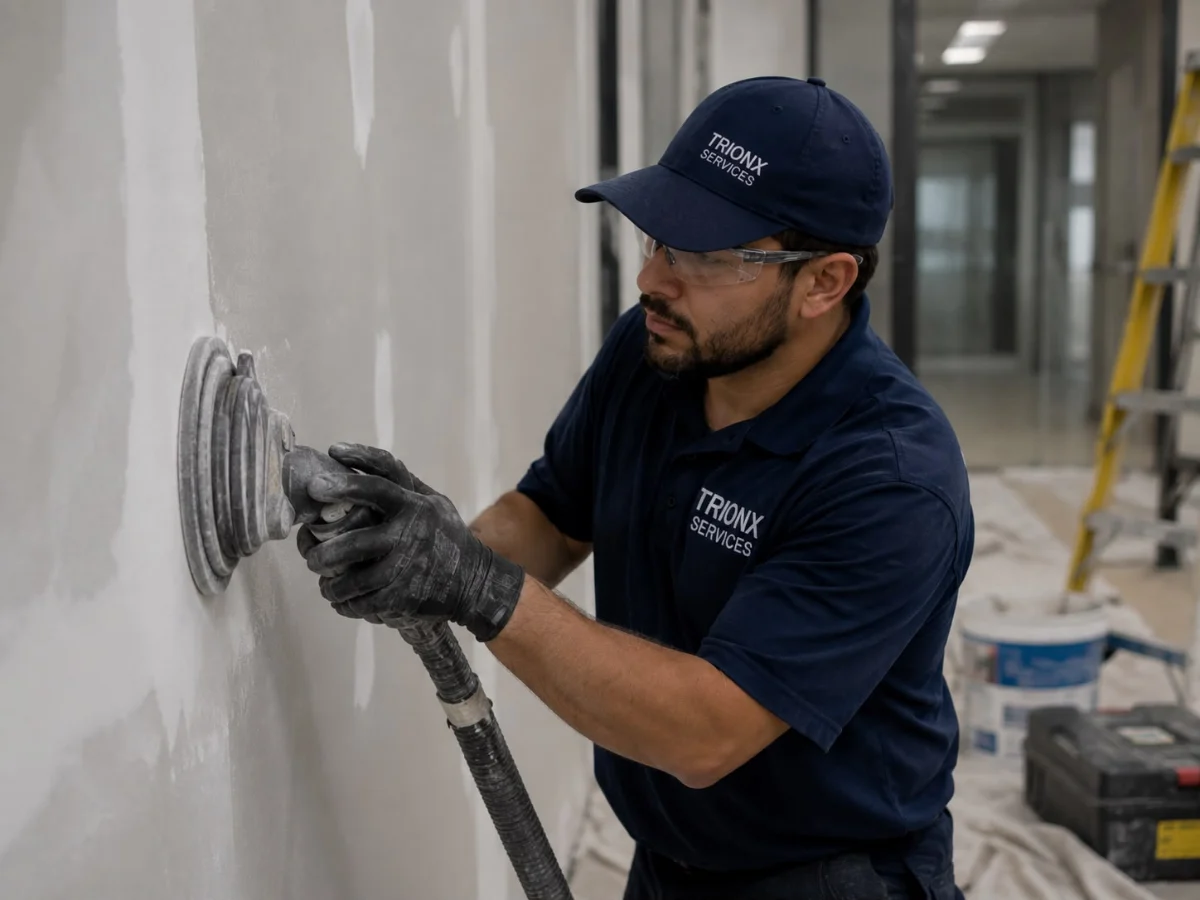
One company, whoever does the work
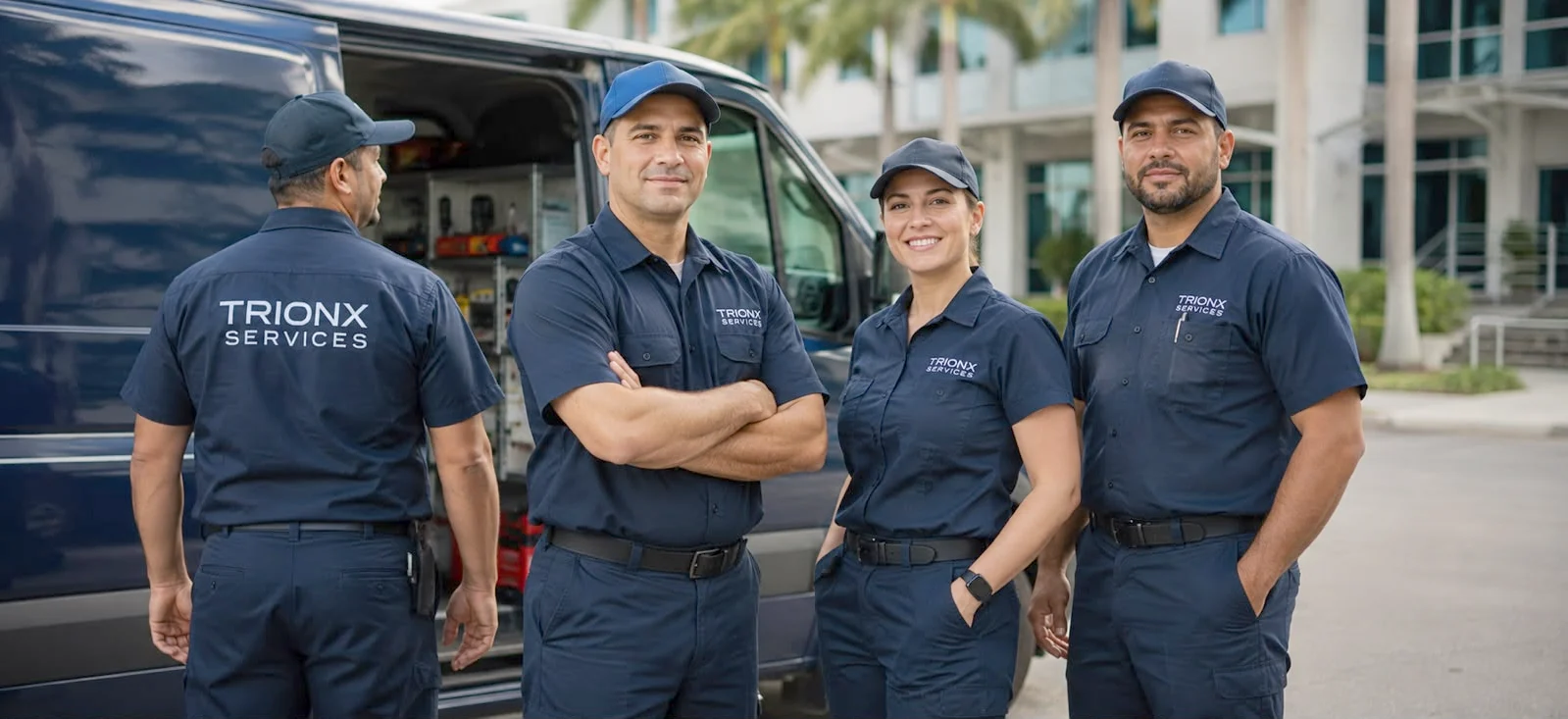
Our technicians handle the trades that need no state license, and licensed contractors handle the ones that do. Either way we scope it, book the visit and file the record. Tell us the property and the problem and we will come back with a window. Call out of hours and someone who works here answers.