
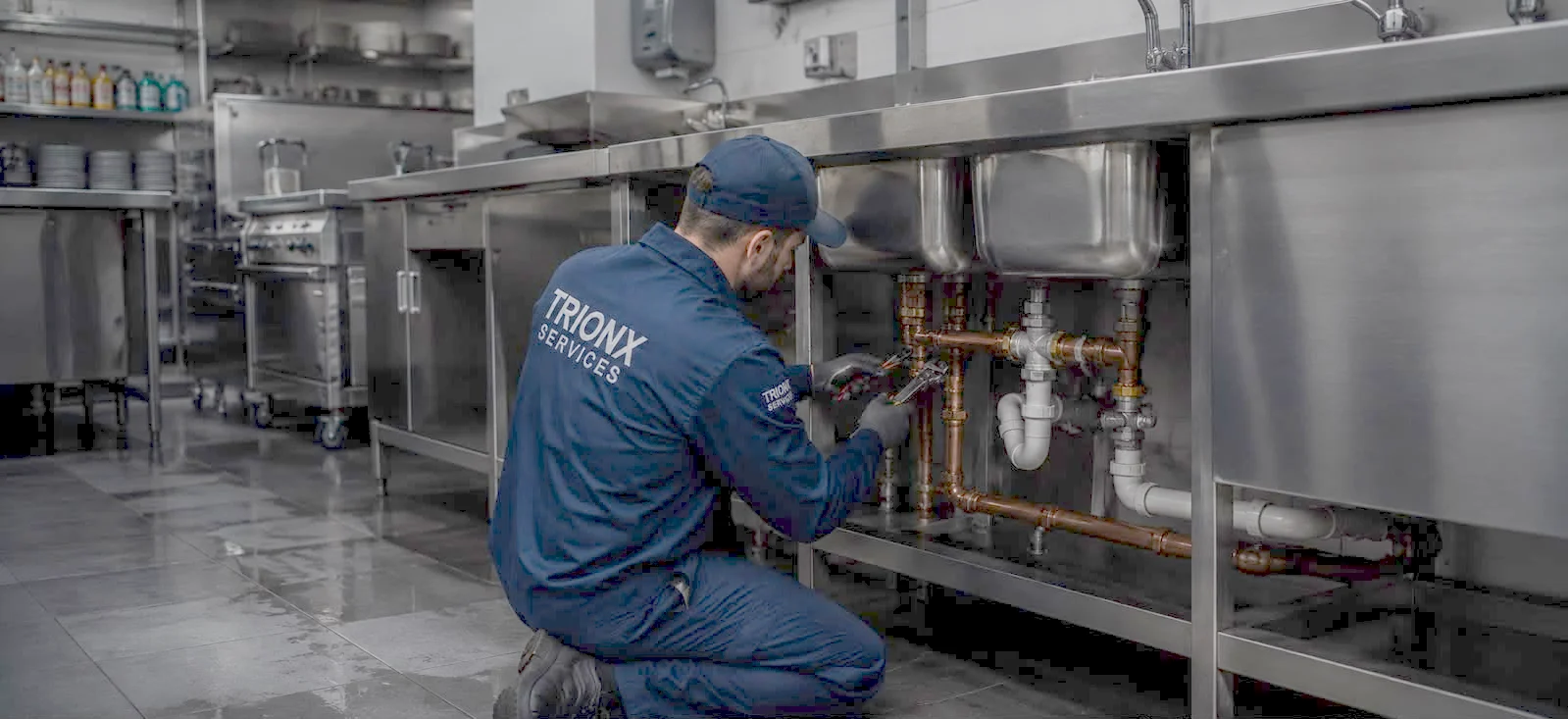
Plumbing
Backflow preventer test: what the annual notice means
A backflow notice asks you to prove that a device on your water line still works. The test is routine, and a failure is usually a repair rather than an emergency.
A notice to test or certify a backflow assembly means the water utility wants written proof that the device protecting its supply still works. The test is done by a licensed plumbing contractor, and the result is sent to whoever the notice names.
The deadline, the assembly covered and the reporting method all come from the notice. Those details differ between properties and utilities, so read yours before doing anything else and treat the paper as the rule.
What the assembly protects
A backflow assembly sits on a water line where your plumbing connects to the public supply, or on a branch that serves something with contamination risk. Fire lines, irrigation, boilers, cooling equipment and food service equipment are the usual places. Its job is to stop water moving backward when pressure in the main drops, for example after a main break or heavy fire flow nearby.
Inside the body are check valves and, on some types, a relief valve. Those parts have rubber seals and springs. They wear, collect debris and sometimes stick, and nothing about them shows from the outside, so only a test tells you whether they hold.
What the annual test involves
The tester isolates the assembly, attaches a gauge set and measures how each check valve and relief valve holds pressure. The assembly either passes or it does not. The result goes on a report with the device type, location, serial number and readings, and that report is what the utility receives.
Water is usually shut off to the line during the test for a short period. Tell the people who depend on it. A restaurant, a car wash or a building with a fire line in service should know when it will happen, and a fire line in particular needs the right people informed before it is isolated.
Access matters more than people expect. Assemblies get fenced in, buried in landscaping or enclosed in a room with a locked door. Confirm the location, the key and the shutoff valves before the tester arrives, or the visit ends without a result.
Who may perform it
Plumbing is licensed work in Florida at any job size, and backflow testing and repair are plumbing. Our article on handyman or licensed contractor goes through where that line sits for the rest of a building. For this task there is no part a maintenance person can take on.
The tester usually also needs a specific qualification for backflow assemblies, and many utilities keep their own list of people they accept reports from. Ask the utility what it requires, then ask the contractor to confirm it before booking.
Testing and repair are carried out by licensed, insured contractors. We coordinate the visit and document it, which includes confirming access, passing the notice details to the contractor and filing the report.
Before the visit, walk to the assembly yourself. Look for a tag, clear any vegetation or stored material from around it, and make sure whoever holds the key to the enclosure will be on site. Write down which building and which line it serves, so the report matches the notice and nobody tests the wrong device.
If the test fails
A failure leads to a repair, then a retest. The plumber typically replaces the worn internal parts, cleans the seats and tests again. If the body is cracked, corroded or an obsolete model, the answer is replacement, and replacement can bring a permit into it. Ask the utility or building department rather than assuming.
The notice or a follow-up letter will usually say how long you have to correct a failure and how the passing result must be reported. Keep that window in view from the day the failed report arrives. A failure that sits unanswered tends to turn into a violation, which is a longer process. Our article on closing out a code violation covers how that goes if it gets there.
Do not wait for the notice to find out the condition. If you see water weeping from the relief valve port, a device that has been hit by a vehicle or one with a missing tag, call a plumber before the next test is due.
Keeping the record
Each year should leave one file per assembly: the notice, the test report, any repair invoice, the retest and proof it was submitted. Add a dated photograph of the device and its tag. When a utility asks for last year's result, or a buyer or insurer asks about the building, the answer is in one place.
Put the next test date on a calendar when the report comes back, because the next notice may arrive late or to a former contact. Our article on what a closeout report should contain describes the shape of that file.
Kitchen drains are a separate matter
A restaurant often has both a backflow assembly and a grease interceptor, and they are not the same requirement or the same inspection. The interceptor is covered in grease trap requirements in Miami. If both fall due in the same season, scheduling them together saves the plumber a trip and gives you one set of paperwork to file.
Who does the work
The test, any repair and any replacement are carried out by licensed, insured contractors, coordinated and documented by TrionX. We pass on the notice, arrange access, attend where needed and return the report with photographs. Our commercial plumbing page describes how that coordination works.
Common questions
Questions we get asked about this
What does a backflow preventer do?
It keeps water from flowing backward out of your building into the public supply. Pressure changes in the main can pull water the wrong way, and without the device whatever sits on your side of the line, such as irrigation water, chemicals or boiler water, could follow it.
Who sets the testing requirement?
It comes from the water utility and the local rules it enforces, so the notice itself is the authority. Read it for the assembly it names, the date by which the result is due and where the report is sent. Call the sender if any of it is unclear.
Can maintenance staff or a handyman run the test?
No. Testing and repairing a backflow assembly is plumbing work, and plumbing is carried out by a licensed contractor in any size of job. Ask for the contractor's credentials before the visit and check that the person is qualified to test assemblies and file the result.
What happens if the assembly fails?
It is repaired or rebuilt, then retested. Worn rubber parts and fouled seats are common causes. A badly damaged or obsolete unit may need replacing, which can involve a permit. The utility will tell you what it expects after a failed result.
What records should I keep?
The notice, the test report for each year, any repair invoice and the retest result, filed by assembly location. Dated photographs of the device and its tag help when someone asks later what was installed and when.
Keep reading
Related field notes
One company, whoever does the work
Our technicians handle the trades that need no state license, and licensed contractors handle the ones that do. Either way we scope it, book the visit and file the record. Tell us the property and the problem and we will come back with a window. Call out of hours and someone who works here answers.