
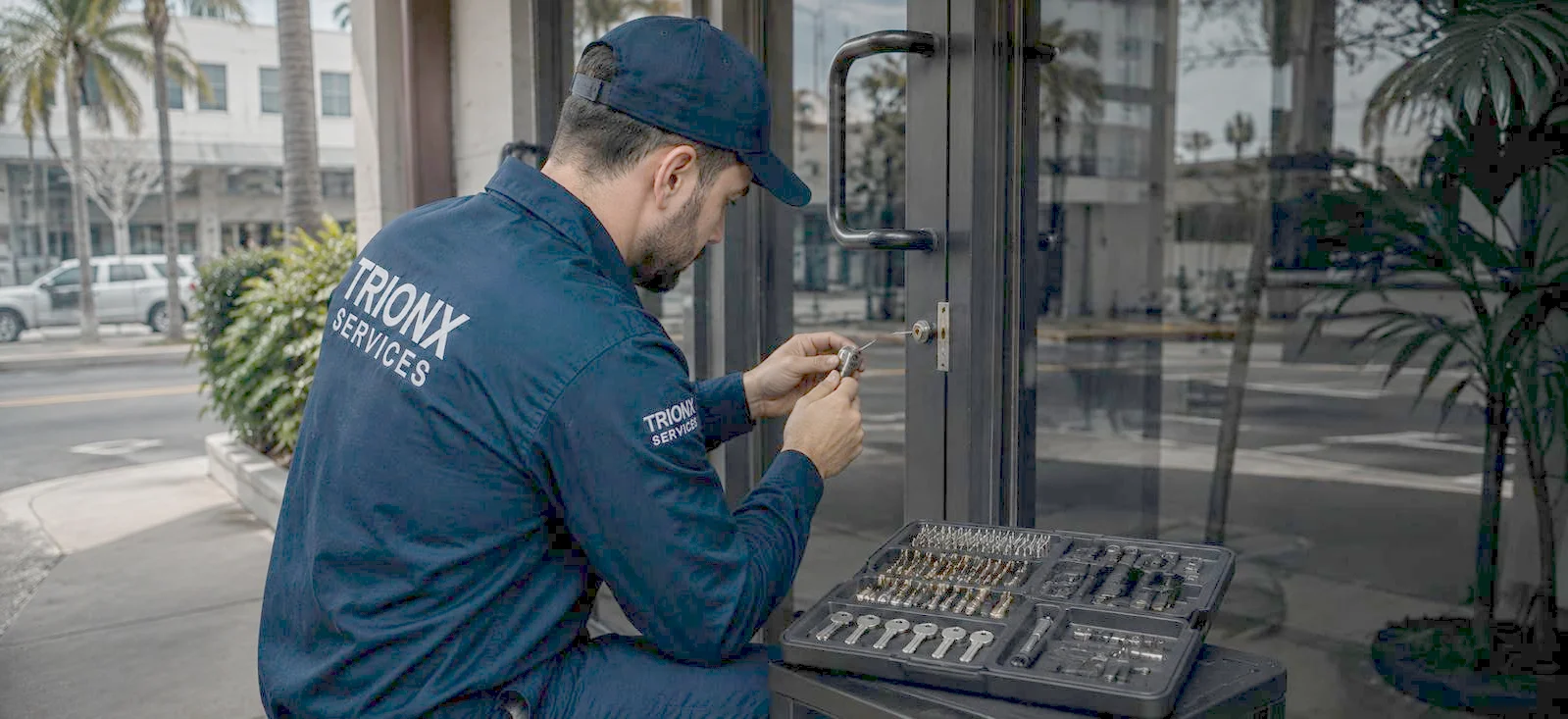
Locks
What to ask before a vendor rekeys your building
A rekey changes which keys open your doors. It also decides who can cut more of them afterward, and that part is settled before the work starts.
Before you give the go-ahead, get five things settled with the vendor: who holds the key codes afterward, whether the keyway is restricted and registered to you, how many keys are cut and who signs for them, what the written record contains, and whether copies can be cut without your say-so. If those answers are vague, the rekey will leave your doors working and your control no better than before.
Most managers ask about timing and about the number of doors. Those matter, but they do not decide who can open the building a year from now. Our article on what happens on a commercial rekey follows the job from arrival to the last key tested. This one is the checklist for the conversation before it.
Who holds the key codes
Every lock cylinder has a pinning combination, and every key cut for it has a matching code. The vendor will usually keep a record of those codes so that more keys can be cut later. That record is the real key to the building, and it should be treated as part of your property.
Ask where it is kept, who in the company can see it and what happens to it if the vendor closes or is replaced. A reasonable answer is that the record is held securely, released to you on request and never used to cut a key without a written instruction from a named person at your company. An unreasonable answer is that it is in the van.
Whether the keyway is restricted
A standard keyway is open. Blanks for it are sold everywhere, and anyone with a key to copy can have it duplicated in minutes, regardless of the words stamped on the bow. A stamp reading do not duplicate stops nobody.
A restricted keyway is a profile where the manufacturer controls the blanks. They are released only against an authorization card or a registered account, and the registration should be in the name of the property or its owner. A copy is then hard to get without you.
Ask which keyway is being fitted, who is named on the registration and how a new key would be ordered. If the answer is a registration in the vendor's name, you can still use the system, but the vendor controls who gets keys. That may be acceptable with a vendor you trust. It should be a decision you made, not something you found out later.
How many keys, and who signs
Agree a number before the work starts, and tie it to a list of names. Say who gets a key and which doors it opens. A rekey that arrives with a pile of spares cut for convenience has recreated the original problem within an hour.
On handover, each key holder signs for what they received. Keys stamped or tagged with a number let you tell, later, which one is missing. If staff change, you know what has to come back. The process is covered in more detail in key control after a termination, and it works only if the first list was accurate.
What the written record contains
You should receive a document, not a verbal summary. At minimum it lists each door, the old and new cylinder or core, the keyway, the key numbers issued and to whom, and the date and name of the technician who did the work. Photographs of each door make later disputes simpler.
Ask also whether the record shows any doors that were not done. A door skipped because the hardware was damaged is still a door that opens with an old key. It should appear in writing with the reason.
Whether the vendor can cut copies without you
This is the question that catches people out, because the honest answer is often yes. A vendor who holds the codes and the blanks can cut a key for anybody who phones in with a plausible story.
Ask what the vendor does when someone requests a key. The answer should involve a named authorizer on your side, a written or emailed instruction and a record of what was cut. If your site manager changes, tell the vendor in writing, and ask them to confirm the previous authority is withdrawn.
Questions that depend on the building
If the building has a master key system, or you plan to add one, raise it before the rekey and not after. The keyway and cylinder choice made now limits what the system can do later, and master key systems for commercial property explains the levels and the trade-offs. It is cheaper to design it first than to rekey twice.
If you are still deciding whether to rekey at all, rekey or replace commercial locks sets out when the existing hardware is worth keeping. Worn or mismatched locks are better replaced during the same visit, and the vendor should say so rather than pinning new pins into a cylinder that is already failing.
Ask also whether the work will be done by the vendor's own employee or handed to someone else on the day. You are giving a stranger the means to open every door you own, so it matters who that person is. Our own technicians are background checked and on our payroll, and TrionX carries general liability and workers' compensation. Ask any vendor you are considering to say the same about the person at your door.
When to do it
Rekeying is best done at a time when the doors can be tested and the building can be secured at the end of the day. Fire doors and exit hardware need particular care, because a cylinder change on the wrong device can leave a door that will not release. Tell the vendor which doors are on an egress route so each one is tested from the inside before they leave.
Locks and access control are performed directly by our own technicians, and the same visit can cover rekeying, replacement hardware and the written record. If you want to talk through a building before approving a quote, the locks and access control page is the place to start.
Common questions
Questions we get asked about this
Who should own the key codes after a rekey?
You should. Every cylinder and every key carries a code or a bitting record, and whoever holds that record can order more keys. Ask the vendor to confirm in writing that the records belong to the property and that copies are cut only on your authority.
What is a restricted keyway?
It is a key profile controlled by the manufacturer. Blanks are sold only against a registered authorization, so a hardware store or a second locksmith cannot cut a working copy. An open keyway can be duplicated by anyone with a blank and a machine.
How many keys should be cut?
Enough for the people who need them today, counted against a list of names. Spare keys cut for convenience are the ones that go missing. Agree the number before the work and have the vendor hand over exactly that many.
Can I keep the old cores if I change vendor later?
Ask before the job. If the cylinders are on a keyway the vendor controls, another company may be unable to extend or re-pin the system. Interchangeable cores and a restricted keyway registered to you leave the choice with the property.
Does a rekey need a contractor license in Florida?
Rekeying, lock replacement and master key work are carried out directly by our own technicians, and none of it needs a contractor license. TrionX carries general liability and workers' compensation on that work.
Keep reading
Related field notes

Rekey or replace: what to do with commercial locks after a tenant leaves
Setting up a master key system without losing control of it
Key control after an employee termination
Choosing a commercial locksmith in Miami
The yearly key and access code audit
Lock functions: which one each commercial door needs
One company, whoever does the work
Our technicians handle the trades that need no state license, and licensed contractors handle the ones that do. Either way we scope it, book the visit and file the record. Tell us the property and the problem and we will come back with a window. Call out of hours and someone who works here answers.