
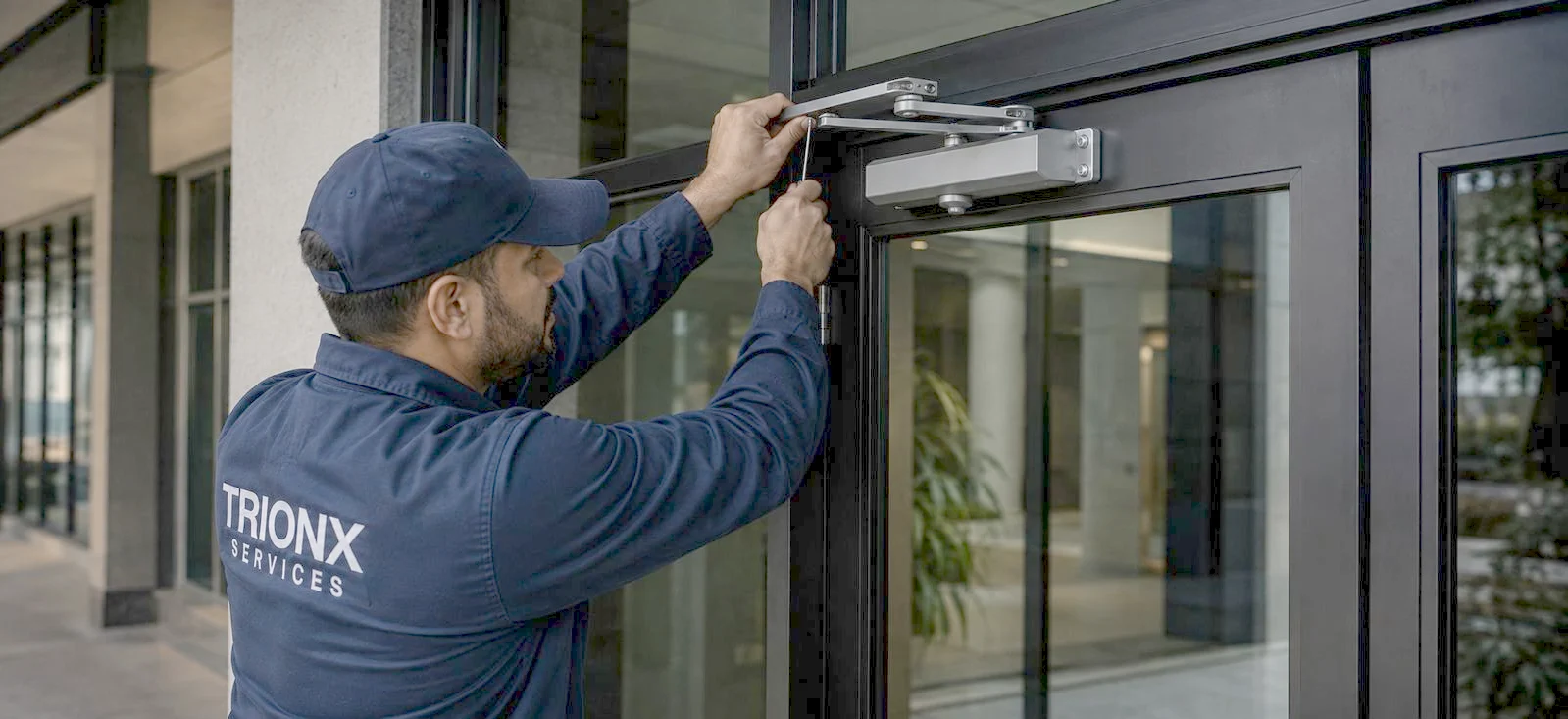
Carpentry
Trim and door frames: repairing rather than replacing
A frame takes the impact the door is blamed for, and it is the half nobody looks at.
A door that binds, drops or refuses to latch gets blamed for it, and the frame is what actually moved. Frames take the impacts, carry the hinges, and hold the strike, and almost nobody looks at one.
Check square before anything else
Measure both diagonals of the opening. Equal diagonals mean a square frame, and a difference of a few millimeters is enough to stop a door meeting its stop evenly along the edge.
Then check the jambs are in the same plane by looking along the frame face from one corner. A frame that has twisted holds the door off the stop at the top or the bottom, which reads as a hinge fault and is not one.
Check the anchorage. A frame fixed into a wall that has moved, or whose fasteners have worked loose under years of impact, shifts slightly every time the door closes hard. Our article on why commercial doors drop covers the diagnosis from the door side.
What is repairable
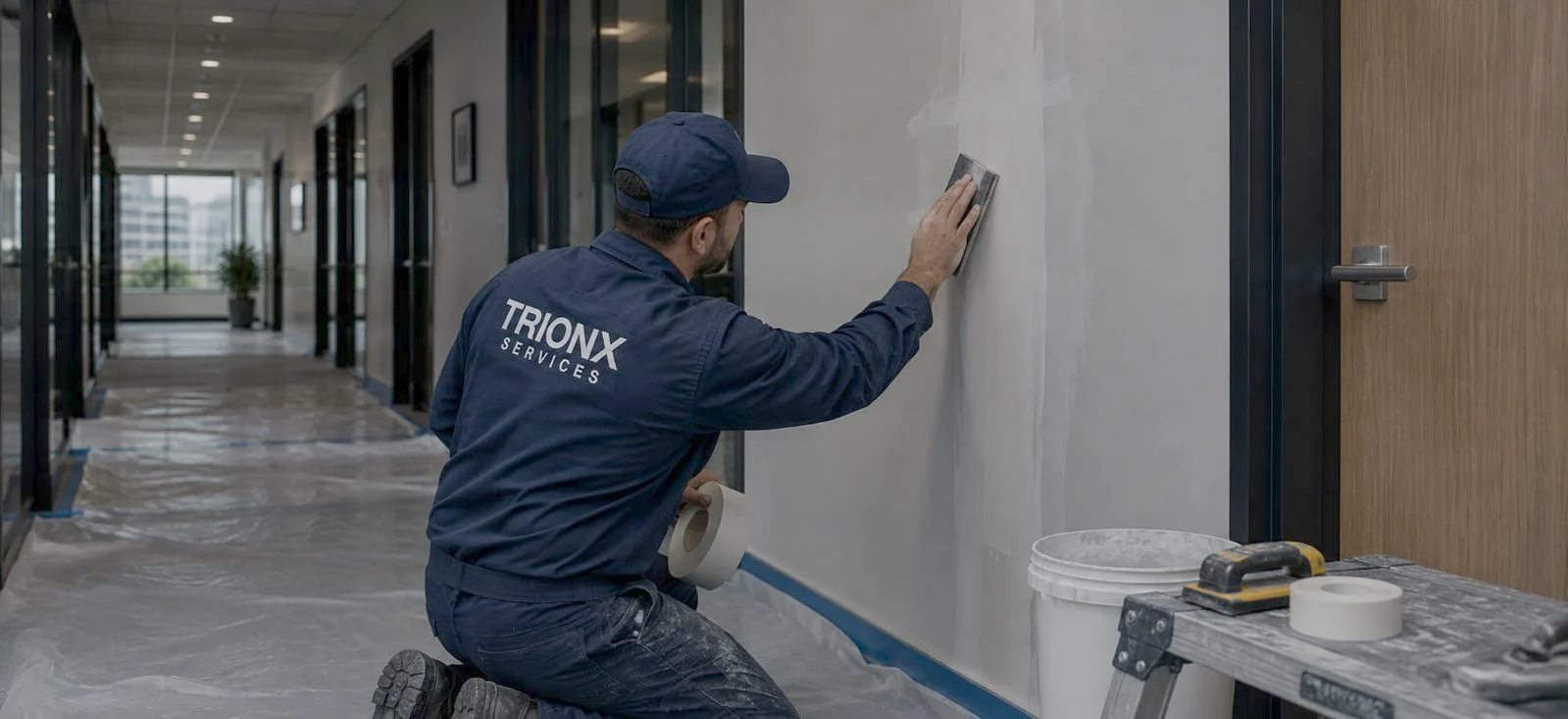
Local impact damage on a steel frame, which is filled and refinished, and on a busy commercial corridor that is a routine repair rather than a compromise.
Worn or enlarged strike preparations, where the latch has been catching the edge for long enough to chew the opening. That is repaired and the strike repositioned, rather than fitting a larger plate to cover it.
Loose or failed anchorage, which is refixed into sound material. Corrosion at the base of a frame, which is common at external openings and in wash-down areas, where the bottom section can often be cut out and let in rather than replacing the whole frame.
Timber frames take a broader range of repairs: splits, split-out hinge screws, damaged stops and rebuilt sections all have straightforward answers.
What is not
A frame pushed out of square by structural movement, because the frame is reporting something the wall is doing. Corrosion that has gone through the section around the hinge or strike reinforcement, where there is nothing left to fix into.
A rated assembly that has been cut, drilled or modified past what its listing allows. On a fire door the frame is part of the tested assembly, and a repair has to keep it that way rather than merely look right.
Our article on repair or replace a commercial door covers the same decision from the leaf side, and the two are usually taken together.
Matching trim is the real constraint
Commercial profiles get discontinued constantly, and a length of casing or baseboard that matches a corridor built fifteen years ago is frequently not available at any price.
So repairing a damaged section in place often produces a better result than replacing it with something close but not identical, because the eye finds a mismatched profile running the length of a corridor far faster than it finds a repair.
Where a replacement is unavoidable, taking it to a natural break, a door opening or an internal corner reads as deliberate. Stopping a new profile halfway along a wall does not.
Stopping it happening again
Damage on commercial frames is rarely random. It clusters at the same height on every opening along a delivery route, because the same cart hits the same point.
Where that is the pattern, frame protection or a kick plate is cheaper over a couple of years than repairing the same corner repeatedly, and it is worth raising rather than quietly repairing it for the third time. Our article on dock and gate access covers openings built for that traffic in the first place.
How the frame is fixed decides what can be done to it
A frame set into a stud partition is anchored to the studs, which means it can usually be released, adjusted and refixed if it has moved. Most internal openings are this straightforward case.
A frame in masonry is often grouted solid, with the void behind it filled during construction. That makes it rigid and durable, and it also means it cannot be shimmed or drawn back into square: the adjustment has to come from the door and the hardware instead, or the frame comes out.
Knowing which you have changes the whole conversation. A frame that looks identical from the corridor is either adjustable or effectively part of the wall, and guessing wrong turns a half-hour adjustment into a much larger job discovered halfway through.
Worth checking at the same time whether the frame has ever been altered. Openings cut for cabling, extra holes from previous hardware and filled strike positions all tell you what has been tried before.
Who carries this out
Frame repair, trim, casing, baseboard, strike work, anchorage, filling and the painting that follows are performed directly by our own technicians. None of it requires a Florida contractor license, and TrionX carries general liability and workers' compensation on that work.
Where a frame has moved because the structure has, that is a structural question and is coordinated through licensed contractors rather than answered with filler.
Common questions
Questions we get asked about this
Can a dented steel frame be repaired?
Often yes. Local damage can be filled and refinished, and a distorted section can sometimes be drawn back. Where the frame has been pushed out of square, or the anchorage into the wall has let go, repair stops being the honest answer.
Why does the door bind when the frame looks fine?
Because square is hard to see. A frame twisted a few millimeters out of plane, or pulled in at one jamb, looks normal and stops the door meeting the stop evenly. Measuring the diagonals is faster than judging it by eye.
Is damaged trim worth repairing?
Usually, and it is mostly about matching. Commercial profiles get discontinued, so a length of matching casing is frequently harder to find than the labor is to justify. A section repaired in place often beats a replacement that does not match the rest of the corridor.
What causes most of this damage?
Carts, pallet trucks and deliveries, at the same height on every door they pass. Where a route takes repeated hits, the answer is usually protection on the frame rather than repairing the same corner every year.
Keep reading
Related field notes
Why commercial doors drop, and what alignment actually involves
Why a drywall patch shows, and how to stop it
Mounting to a commercial wall: what actually holds
Door and glass inspection once hurricane season is over
A yearly check of storefront glass and glass doors

Lock functions: which one each commercial door needs
One company, whoever does the work
Our technicians handle the trades that need no state license, and licensed contractors handle the ones that do. Either way we scope it, book the visit and file the record. Tell us the property and the problem and we will come back with a window. Call out of hours and someone who works here answers.