

Facilities
First week in a new building: what to check before you inherit it
Everything wrong with a building you have just taken on becomes yours the moment something proves it, so it is worth finding out first.
Start with the keys and the exits. Who can get in, and can everybody get out. Both are answerable in a morning, both carry real consequences if they are wrong, and neither needs any equipment.
Everything else in the building can be worked through over the following weeks.
Keys and access, on day one
Ask for the key schedule and expect it to be incomplete or absent. A building that has changed hands has usually accumulated keys across several tenancies, contractors and staff, and nobody has a full list.
Rekeying is the sensible default for exactly that reason. It is a modest cost against having no idea who holds a working key, and it gives you a key register that starts from a known position. Our article on key control covers what that register should record.
On access control, export the current credential list and check it against people who actually work there. Buildings routinely carry live credentials for people who left years ago. Change any shared codes right away.
Walk the escape routes as escape routes
Start at the furthest point from an exit and walk out the way somebody would in the dark. Then do it again from the other end of the building.
Look for chains, padlocks, bolts and bars added to exit doors, which are the most common finding on commercial property and survive handovers because they are added for a practical reason and nobody revisits them. Look for exit routes blocked by stock, bins or parked vehicles. Push every exit device once, flat-handed, and see whether it releases in one motion.
Check the fire doors: do they close fully on their own from any position, do they latch, are the seals intact, has anything been wedged. Our articles on fire door inspection and panic hardware cover what to look for in detail.
The envelope and the openings
Walk the perimeter outside and look up. Roofline, parapets, flashings, drains and anything that has been repaired badly. Then look at every external door and window from both sides.
Doors tell you a lot about how a building has been run. Ones that need a shoulder, latch on the second attempt, or have had a second lock added are all telling you something was never fixed properly. Glass that is cracked, chipped or has a failed seal in an insulated unit is worth noting now, because it will be attributed to your tenure otherwise.
The services and their age
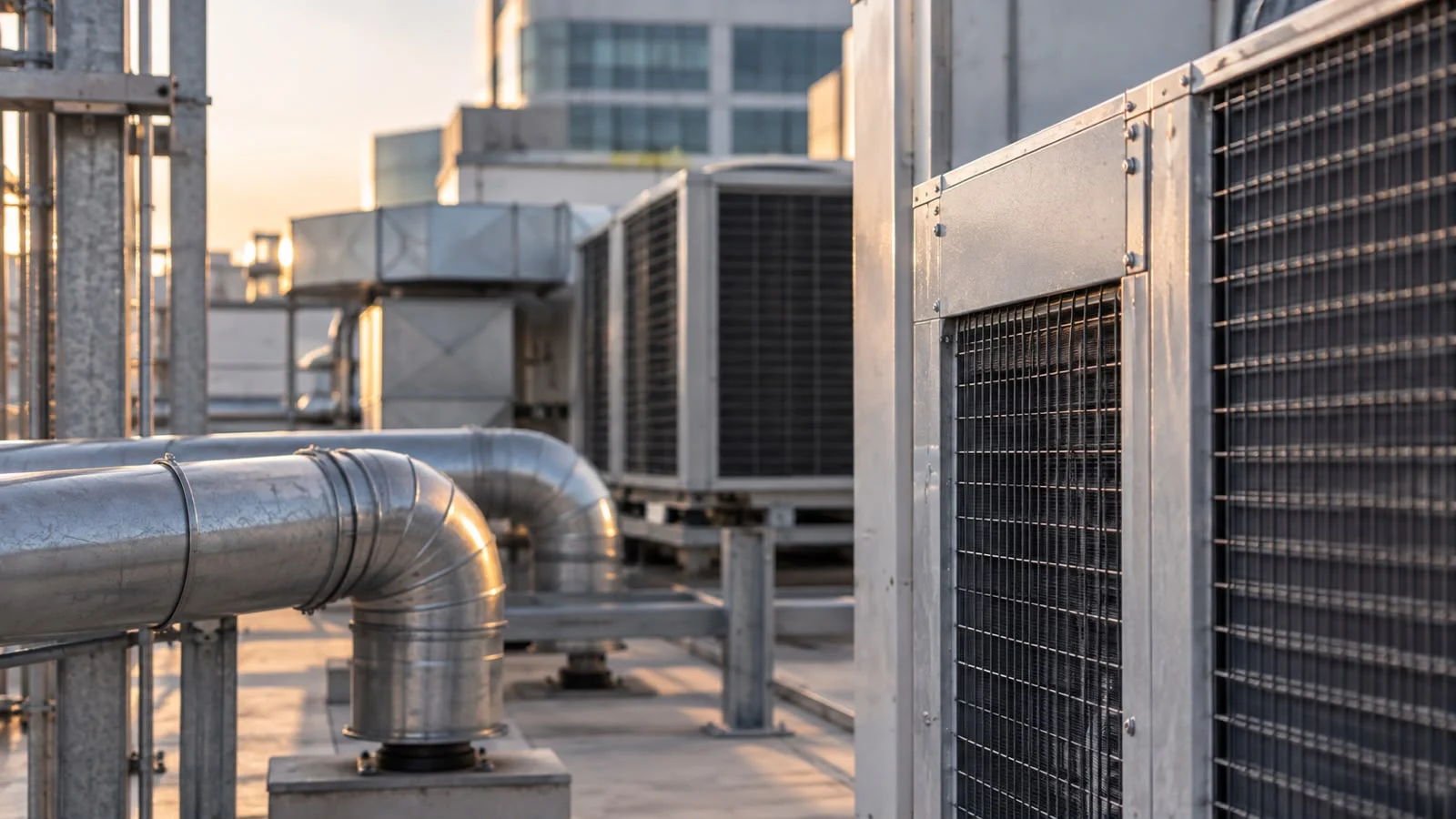
Find the nameplates and write down what you have: air conditioning units, water heaters, refrigeration, panels and any powered doors or gates. Manufacture dates on the plates tell you roughly where in their life the building is, and that is the single most useful thing you can know in the first week.
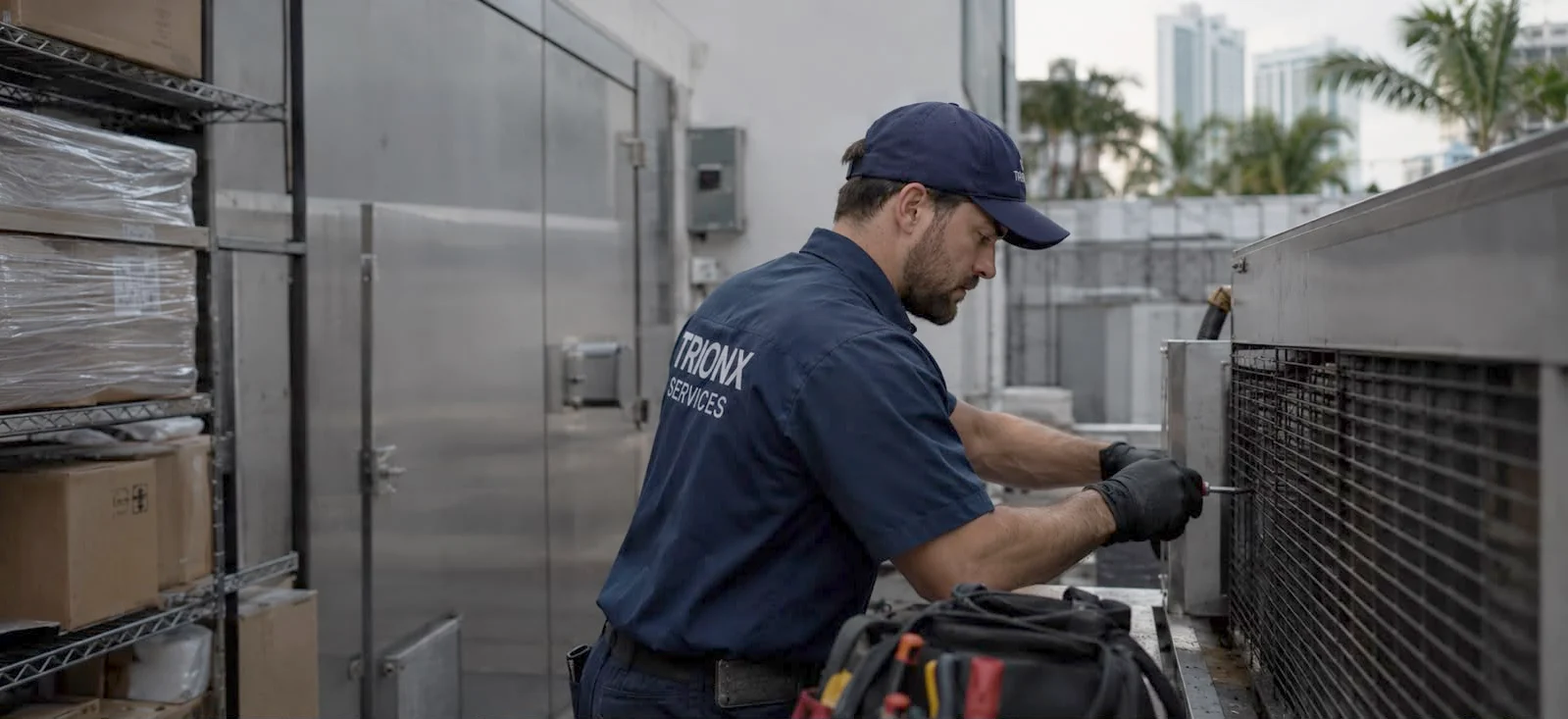
Check the condensate drains on the air conditioning, which is the most common source of water damage in Miami and the easiest to inspect. Check any walk-in for door seal, ice and whether it is holding.
The records you should have been given
Service history for the plant. Fire and life safety inspection records. Permits and closeout documents for recent work. Warranties. A key schedule. Manuals.
Assume most of it will not arrive. Ask once, in writing, and then start building your own from day one rather than waiting. A building with no history is not unusual and it is manageable, provided you know that is what you have.
Unpermitted work is the item worth asking about directly, because it becomes your problem at a sale, a refinance or a change of use, and it is far cheaper to identify now than to discover under a deadline.
Setting a baseline
Photograph the building systematically in the first week, before anything changes. Exteriors on each elevation, every room, every ceiling, every door, the roof if it is safe to access, and the plant.
That set of photographs is what tells you later which defects you inherited and which appeared on your watch, and it is what a storm claim or a dilapidations argument will turn on. Our article on the quarterly property walk sets out a repeatable version of the same exercise, and the first week is the right time to run it properly.
Then decide what is scheduled
Once you know what you have, the useful next step is a maintenance schedule rather than a list of repairs. Our article on building a preventive maintenance schedule covers the intervals that matter in this climate.
Locks, doors, hardware, glass, carpentry, painting and general maintenance in that schedule are performed directly by our own technicians. Electrical, plumbing, HVAC and refrigeration are coordinated through licensed contractors, because Florida requires a license for those at any job size, and documented alongside everything else.
Common questions
Questions we get asked about this
What should I do on day one?
Establish who has keys and access, and check the exits. Those are the two that carry real consequences if they are wrong, and both can be worked through in a morning without any specialist equipment.
Should I rekey a building I have just taken over?
In most cases yes, because you have no way of knowing how many keys exist or who holds them. Handover key lists are usually incomplete, and the cost of rekeying is small against not knowing who can enter.
What records should I have been given?
Service history for the plant, fire and life safety records, warranty documents, permits and closeout paperwork for recent work, and a key schedule. Assume you will not receive most of it and start building your own from the first day.
What is the most commonly missed problem in a handover?
Exits. Chained doors, blocked routes and panic hardware that has been dogged or defeated survive handovers because nobody walks the escape routes as escape routes. They are also the finding written up most often.
Keep reading
Related field notes
Key control after an employee termination
Building a preventive maintenance schedule that survives contact with reality
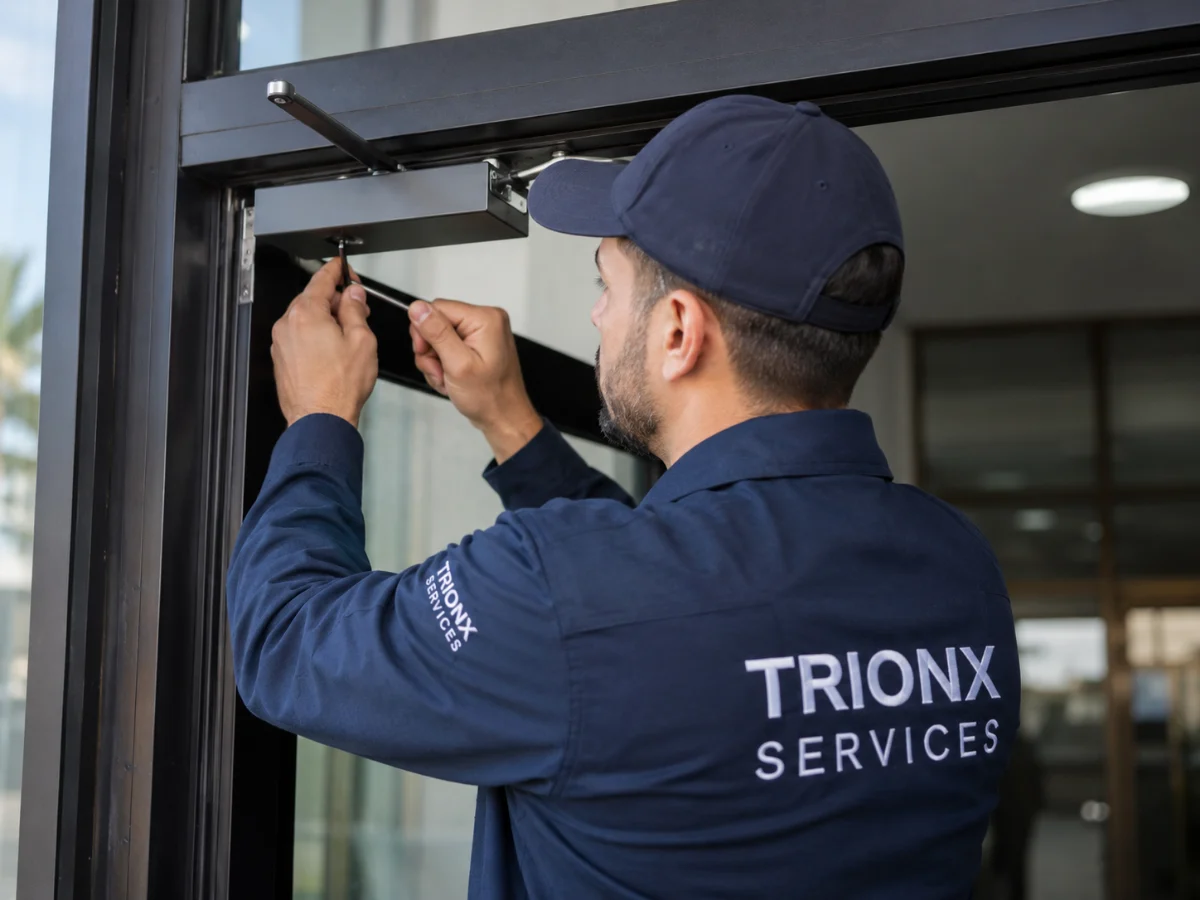
Fire door inspection: the annual requirement and the paperwork
Handing back a leased unit: making good before surrender
The ice machine is not making ice, or the ice is slimy
Parking lot striping and ADA stall markings: when to redo
One company, whoever does the work
Our technicians handle the trades that need no state license, and licensed contractors handle the ones that do. Either way we scope it, book the visit and file the record. Tell us the property and the problem and we will come back with a window. Call out of hours and someone who works here answers.