

Facilities
An insurance loss control survey found deficiencies
A loss control report reads like advice and behaves like a deadline, and the difference is in which items are written as conditions.

Go through the report and mark each item as a condition or as advice. Conditions carry a date and affect your cover. Advice does not. Reports frequently mix the two in one list and in one tone, and sorting them is the first useful hour of work.
Then take the conditions and put dates against them that are earlier than the ones you were given.
The findings that come up most
Housekeeping and combustible storage. Pallets, packaging, stock and waste accumulating where they should not be, particularly against a building, near a panel, or in a corridor. This is the most common category and the cheapest to close.
Exits and egress. Blocked routes, chained or bolted exit doors, exit hardware that does not release. The same findings a fire inspector raises, from a different direction.
Working clearance in front of electrical panels and switchgear, which quietly becomes a storage area in almost every building.
Water damage exposure. Roof condition, blocked roof drains, condensate lines, aging supply lines, and anything sitting on a floor that would be ruined by a few centimeters of water.
Security and the building envelope. Doors that do not lock reliably, damaged glazing, lighting that has gone dark in a yard or a parking lot.
Sorting it by who can do the work
Housekeeping is yours and it is free. Do it this week and photograph it, because it is usually a third of the list.
Doors, locks, exit hardware, glass repair, carpentry, painting, ceiling and general maintenance need no contractor license in Florida and are performed directly by our technicians.
Electrical, plumbing, HVAC, refrigeration, roofing and structural work require a licensed contractor at any job size, and so does anything needing a permit. Those are coordinated and documented by us. Roof findings and panel work fall here, and they are usually the two with the longest lead time on a loss control list.
The order to work through it
Conditions before advisory items, always.
Within the conditions, take housekeeping and egress first because they are quick, cheap and highly visible to whoever reviews the response. Start the licensed and permitted work at the same time even though it finishes later, because coordinating it is what takes the calendar time.
Advisory items go onto the maintenance schedule rather than into this project. They are worth doing and they are not worth paying a premium to do inside somebody else's deadline.
Note when your renewal falls, because it sets the real deadline whatever dates the report carries. A survey carried out a few months ahead of renewal is usually feeding into that decision, and the same evidence has more effect sent early than sent late.
Give one person the report. These lists cross housekeeping, maintenance, several trades and often a landlord, and the items nobody owns are the ones still open at the next survey.
Where a finding is the landlord's responsibility rather than yours, answer it saying so rather than leaving it blank, because an unanswered item reads as an ignored one. Our article on splitting repair responsibility covers how those lines usually fall.
What to send back
Evidence against each numbered finding, in the report's own numbering. A photograph before, a photograph after, the date, and the invoice naming the work.
Where a finding was about an interval rather than a defect, such as roof inspections or a maintenance schedule, send the schedule and the first completed record rather than a promise. Our article on building a maintenance schedule that survives contact with reality covers what that looks like in practice.
Assemble it as the work happens. Reconstructing a response afterward is where the effort goes, and it reads as reconstruction.
The reason this is worth doing properly
Set the insurance question aside for a moment. The recurring findings on these reports are the same conditions that produce the losses: things stored where they burn, water reaching things it should not, exits that do not work when they are needed, and buildings that do not lock.
A property that runs a documented quarterly walk produces short loss control reports, and it produces them without a scramble. In Miami the same is true of the hurricane preparation list, which overlaps a loss control report more than half the time.
Who carries this out
The unlicensed trades above are performed directly by our own technicians, on our payroll, background checked, with TrionX carrying general liability and workers' compensation. Photo documentation comes as standard on every job, which is convenient here because photographs are exactly what the response needs.
The licensed trades are carried out by licensed, insured contractors, coordinated and documented by us, so the evidence pack comes back as one record rather than as several vendors' paperwork collected by hand.
Common questions
Questions we get asked about this
Do I have to act on every recommendation?
Read which are written as conditions or requirements with a date, and which are advisory. The first group affects your cover and the second does not, and reports rarely make that distinction as loudly as it deserves.
What happens if we do nothing?
That is a question for your broker rather than for us, because it turns on the wording of your policy. The items usually raised are also the ones that cause the losses, so the maintenance case for doing them stands on its own.
What do they want back as proof?
Evidence rather than assurance: dated photographs, invoices naming the work, and service records where the finding was about a maintenance interval. A written statement that something has been dealt with, with nothing attached, tends to come back.
Are these usually big capital items?
Less often than people fear. The recurring findings are housekeeping, exits, combustible storage, water damage exposure, panel clearance and security, and most of those are maintenance and organization rather than construction.
Keep reading
Related field notes

The quarterly walk: what to check on a commercial property

The commercial hurricane preparation checklist

Building a preventive maintenance schedule that survives contact with reality
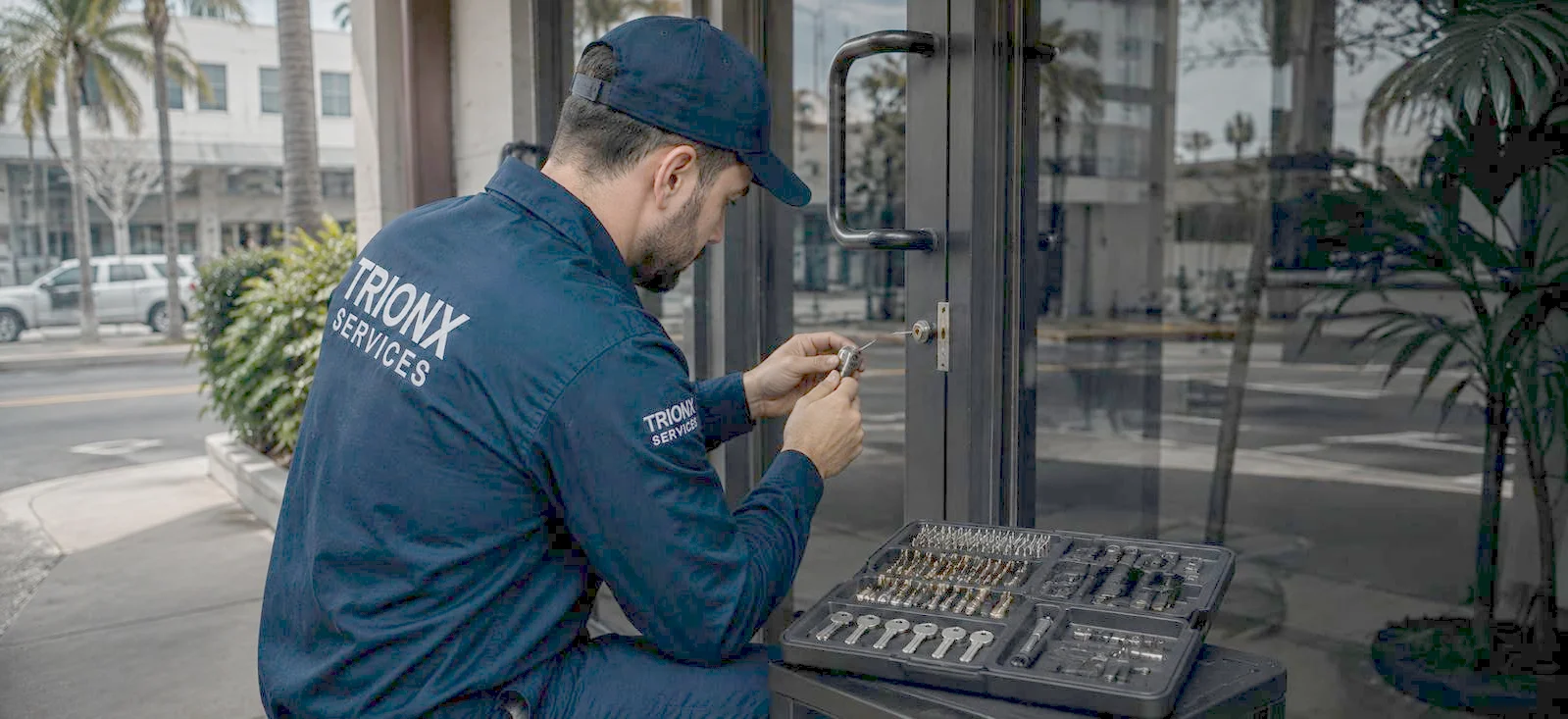
Locked out of a commercial property: what happens when you call
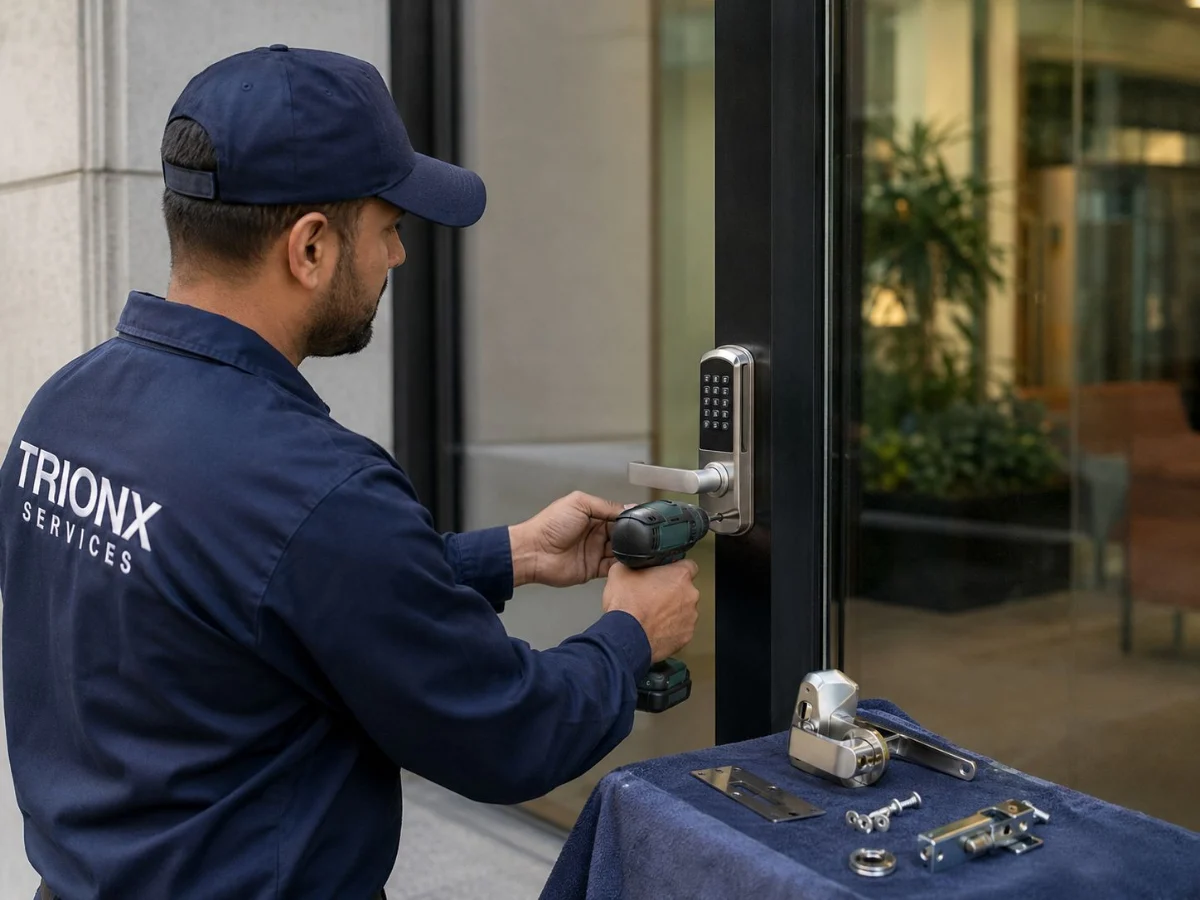
Keypad or card reader has stopped working

A key has snapped in a commercial lock
One company, whoever does the work
Our technicians handle the trades that need no state license, and licensed contractors handle the ones that do. Either way we scope it, book the visit and file the record. Tell us the property and the problem and we will come back with a window. Call out of hours and someone who works here answers.