
Locks
A key has snapped in a commercial lock
A key that has snapped off in the cylinder is usually recoverable. The next ten minutes decide whether it stays that way.
Someone who works here answers, out of hours included. (786) 628-9227

Stop using the lock. The most common way a recoverable extraction turns into a cylinder replacement is somebody trying the other half of the key, or a spare, and pushing the fragment further in.
If a stub is clearly protruding, fine-nosed pliers pulled straight out along the line of the keyway sometimes take it. Pull, do not twist, and stop if it does not move. If nothing is protruding, leave it alone.
What makes it worse
- Superglue on a matchstick. It bonds the fragment to the pins and to the plug, and what was an extraction becomes a replacement.
- Pushing anything into the keyway. Paperclips, screwdrivers and blade fragments all drive the piece deeper past the point where an extractor can reach it.
- Lubricating spray. Oil-based sprays attract dust and gum the mechanism, and they rarely help. If a lock genuinely needs lubrication it needs a dry graphite or PTFE product, and it needs it as a repair rather than a rescue.
- Trying the spare. The spare meets the fragment and pushes it home.
Why it broke
Keys almost never break because the key was weak. They break because they are being forced, and the force is coming from somewhere.
A cylinder that is binding takes more turning effort every month until something gives. A door that has dropped or is under building pressure loads the bolt, so the key is fighting the weight of the door as well as the lock. And a worn key in a worn lock reaches a point where the cuts no longer lift the pins cleanly and the natural response is to push harder.
That matters because extracting the fragment fixes the symptom. If the cylinder was seizing or the door was loading the bolt, the next key will break too.
What happens on the visit
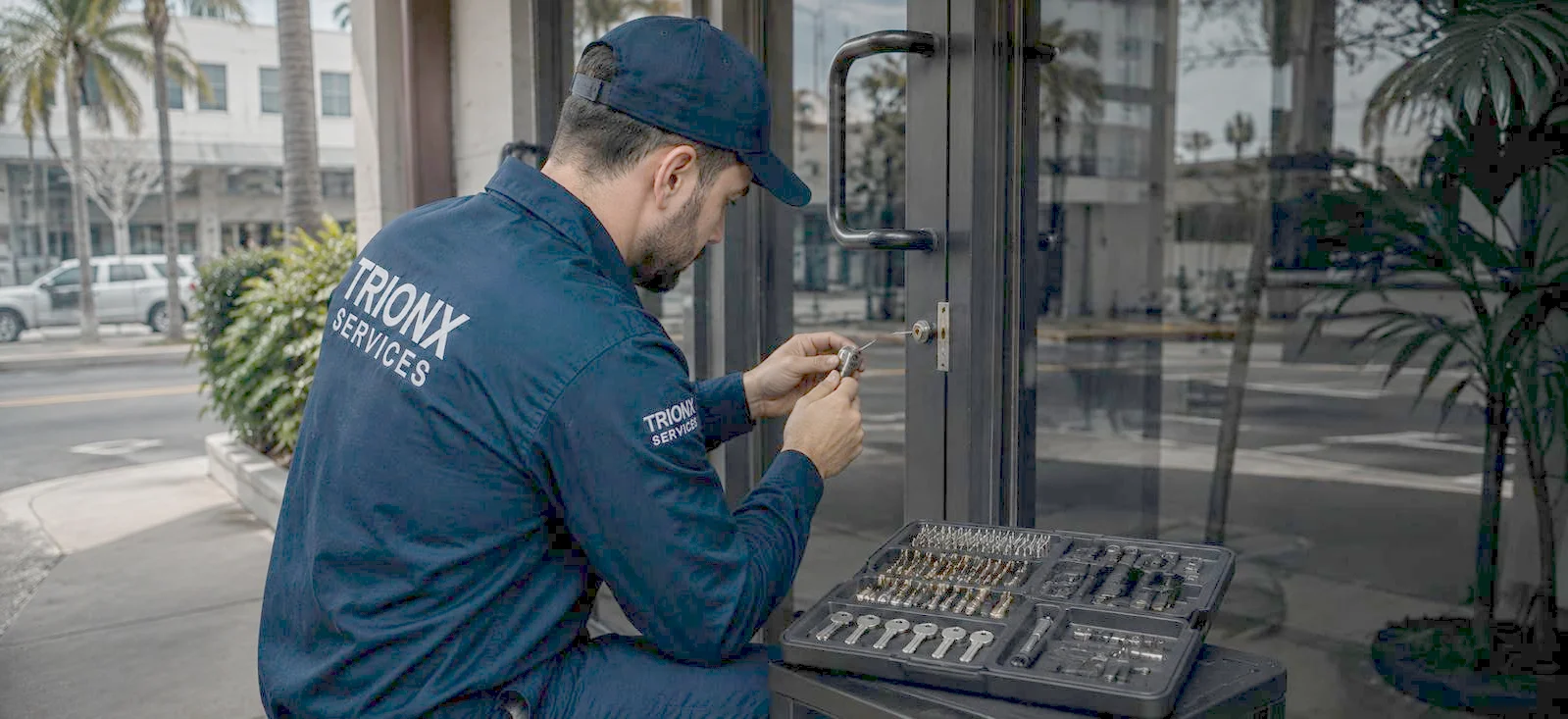
The fragment is extracted with a proper extractor, which reaches past the pins and draws the piece out along the keyway without driving it deeper. Most cylinders survive this without damage.
Then the cause gets checked, because that is the part that stops it recurring: whether the plug turns freely once cleared, whether the door is hanging correctly, whether the bolt is under load from a dropped door, and whether the remaining keys are worn enough to be worth recutting from the original code rather than copied from a copy.
Where the cylinder has been damaged, either by the break or by an earlier rescue attempt, it is replaced. If the property is on a master key system, the replacement is pinned back into that system rather than left as a one-off, which is a detail that gets missed and quietly puts a door outside the hierarchy.
Whether to rekey
If both halves of the key are on site and accounted for, this is a maintenance event and nothing more. If part of it left the property, or the key was one nobody can account for, that is a different question and rekeying is the only way to close it.
Whether it can wait
If the door still locks and unlocks on another key or from the inside, this is a scheduled job. If the fragment has left the door unlocked, or locked with nobody able to open it, it is not.
The case worth acting on quickly even when nothing is stuck: a key that broke because the cylinder was seizing. That lock is failing and the break was the warning. Leaving it means the next key breaks too, probably at a worse moment, and the second extraction is more likely to damage the cylinder than the first.
Tell us on the call whether the door is currently secure, whether a spare exists, and whether the lock had been getting stiff. That last one changes the visit from an extraction to an extraction and a replacement, and it is better known before the van arrives than after.
Keep the broken half of the key. It shows how the cylinder was cut and it makes originating a replacement straightforward, which matters most on a master keyed system where the new cut has to sit correctly in the rest of the suite. Without it, the replacement has to be worked back from the lock itself.
Who carries this out
Key extraction, cylinder repair and replacement, rekeying and master key work require no Florida contractor license. TrionX performs all of it with its own employees, and any lock replaced on a master system is repinned into that system with the register updated when the work is done.
Common questions
Questions we get asked about this
Can I get the broken piece out myself?
Sometimes, if a visible stub is protruding and it comes out with fine pliers pulled straight. Pushing the fragment deeper ruins a cylinder, so if nothing is protruding, stop. Superglue and paperclips both turn a ten-minute job into a replacement.
Will the lock have to be replaced?
Usually not. Most broken keys are extracted and the cylinder is undamaged afterward. Replacement becomes likely when the fragment has been pushed in, when the cylinder was already worn, or when the break happened because the lock was seizing.
Why do keys snap?
Rarely because the key was weak. A key breaks because it is being forced against something: a cylinder that is binding, a door under pressure so the bolt is loaded, or a worn key in a worn lock. The break is a symptom of a fault that was already there.
Should we rekey afterward?
Only if part of the key left the property or was in circulation unaccounted for. A key that broke in your hand and stayed in two pieces on site is not a security event. A lost half is.
Keep reading
Related field notes
Rekey or replace: what to do with commercial locks after a tenant leaves
Commercial door will not lock: what to do tonight
Who is the technician with keys to your building?
The yearly key and access code audit
Lock functions: which one each commercial door needs
Salons and spas: humidity, chemicals and finishes that show everything
One company, whoever does the work
Our technicians handle the trades that need no state license, and licensed contractors handle the ones that do. Either way we scope it, book the visit and file the record. Tell us the property and the problem and we will come back with a window. Call out of hours and someone who works here answers.